Sharps Disposal Made Simple: Safe Handling And Container Choices For Alberta Clinics
Safe sharps handling protects your team, your patients, and your community. You manage busy rooms and quick turnarounds. You need steps you can trust. This guide gives you a clear process from point of use to final disposal. You will see what goes in which container. You will see where to place containers. You will see when to close and replace them. You will see how Cobalt sets reliable pick-up routes across Alberta.
What counts as a sharp and how to segregate items
Sharps are items that can puncture or cut skin. Place the following into approved sharps containers immediately after use:
- Hypodermic needles with or without syringes attached
- Scalpel blades and disposable scalpels
- Lancets and blood glucose needles
- Injection pens with attached needles when removal is not safe
- Suture needles, IV catheter stylets, trocars
- Broken glass or rigid plastic that is contaminated with blood or bodily fluids; for example, ampoules and slides
Items that do not belong in regular garbage:
- Any contaminated sharp; even if capped
- Plastic syringes that have contacted blood or medication residue; if a needle was attached, treat the whole unit as a sharp
- Broken contaminated glassware
- Contaminated pipette tips that are rigid and puncture risk
Items that do not belong in sharps containers:
- Soft items such as gauze, gloves, and IV tubing
- Paper, packaging, and wrappers
- Liquid medications or bulk fluids
- Pharmaceutical waste that is not a puncture risk; follow your pharmacy waste stream
- Batteries and electronics
When in doubt, treat the item as a sharp if it can puncture skin and is contaminated. Use the sharps container at point of use. Close the container temporarily between uses.
Point of use matters: placement that prevents injuries
Place a sharps container within arm’s reach of the procedure area. Do not walk with an uncapped needle. Follow these placement rules:
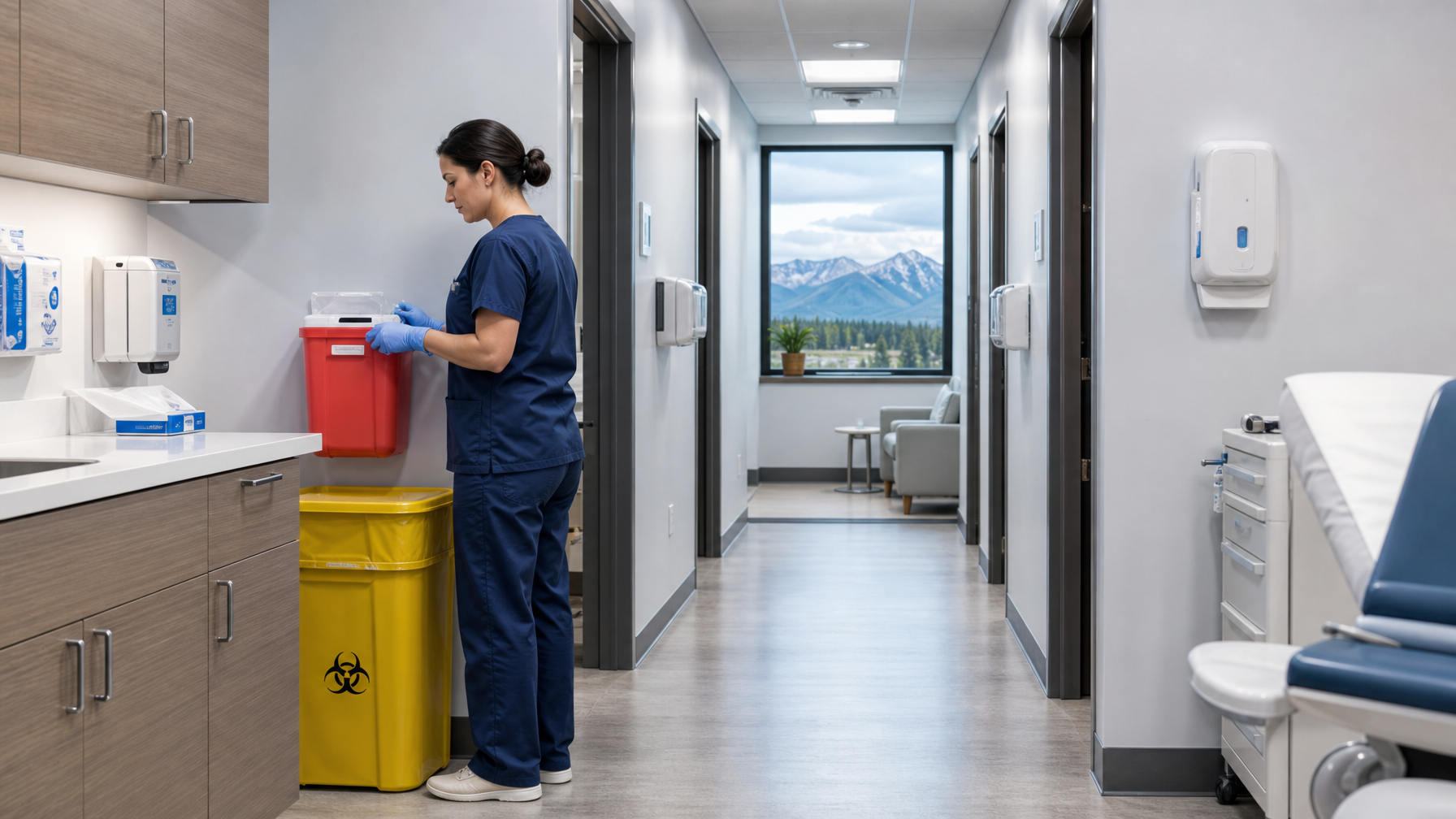
- Mount wall brackets at eye level or slightly below; do not place on the floor
- Keep containers away from public reach; secure in clinical zones
- Position beside the treatment chair, injection station, or phlebotomy chair
- In surgery rooms, place on the wall near the instrument table and away from the sterile field
- In animal treatment bays, mount at each station to avoid carrying sharps across the room
Clear line of sight reduces errors. Stable mounting prevents tipping. Lids must open easily with one hand. You should never force items through the opening.
- Fill lines, closure, and replacement timing
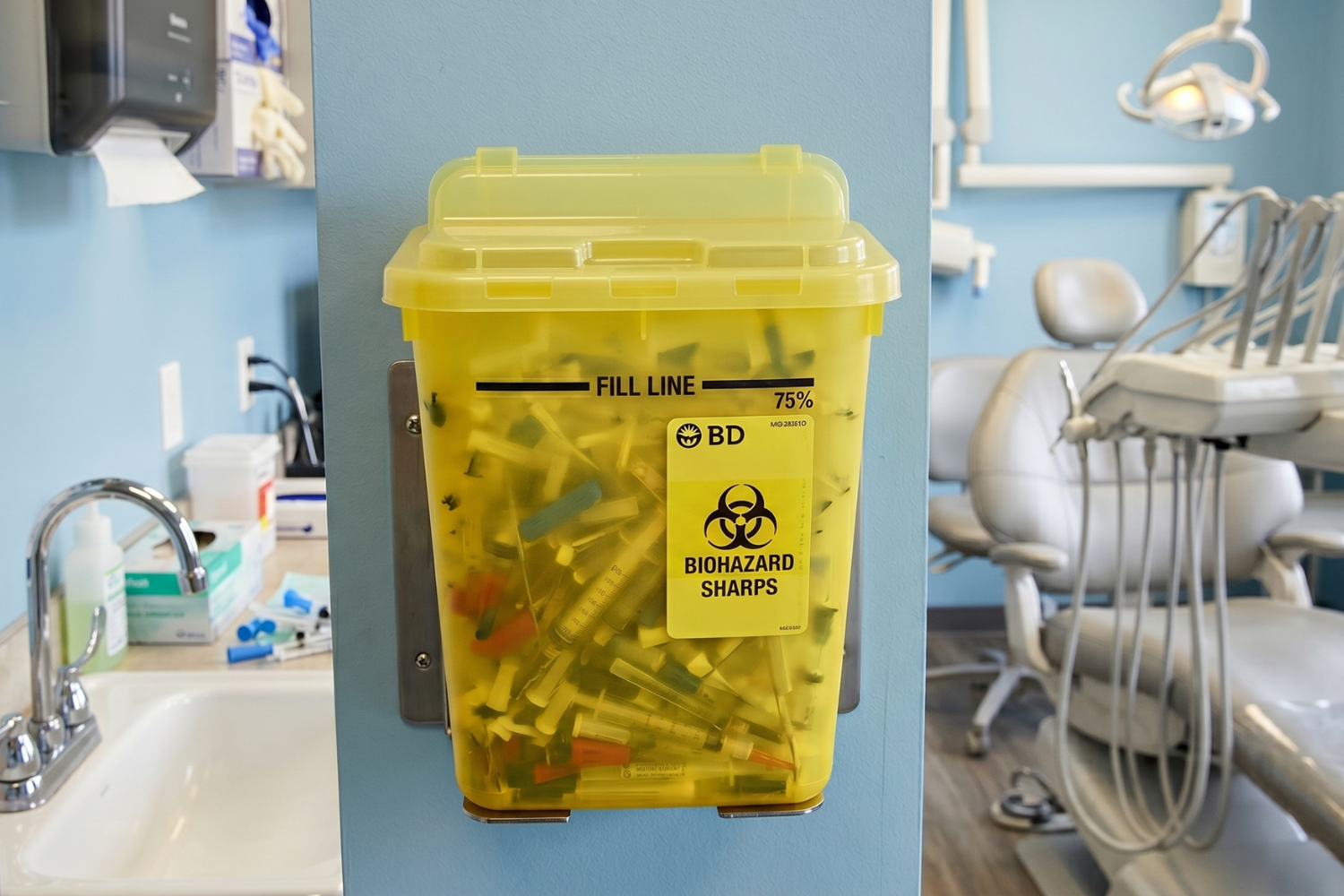
- Every container shows a fill line. Follow it. Overfilling is a common cause of needle-stick injuries.
- Stop using the container when contents reach the fill line
- Activate the temporary closure whenever the container is moved
- Snap the final closure before transport or when the container is at capacity
- Replace immediately; do not attempt to compress contents
- Label the container if required by your policy, then stage it in your secure holding area
If a container is damaged or cannot close, place it inside a larger, compliant secondary container and mark it for pick-up.
Right-sized containers and bracket choices
Different rooms generate different volumes. Choose sizes that match actual use. Cobalt recommends sizes and brackets after a short consultation so each space has the right fit.
Low-volume areas, examples include vaccine fridges, exam rooms with occasional injections:
- 1 to 2.2 quart containers in compact wall brackets
- Mount near the sink or exam table to reduce travel with sharps
- Replace more often, but keep the footprint small
Medium-volume areas, examples include dentistry operatories, family practice injection clinics, small treatment rooms:
- 3 to 5 quart or 3 gallon containers with locking brackets
- Wall mounted near the chair or cart; one per room for convenience
- Hinged lids that allow one-handed operation for used carpules and scalpel blades
High-volume areas, examples include veterinary surgery, urgent care, and procedure rooms:
- 8 quart, 5 gallon, or larger containers in heavy-duty locking brackets
- Place one at each high-use station and one at the exit to capture last-minute disposals
- Consider a second container for contaminated rigid glass to keep needles from bridging
Brackets matter. They prevent tipping, support one-handed use, and keep containers where staff expect them. Cobalt supplies non-locking and locking brackets that match the chosen container, so your wall mounts and container lids work as a set.
Do’s and don’ts that cut needle-stick risk
Follow these simple rules every shift:
- Do use a sharps container at the point of care
- Do activate engineered protections on safety needles
- Do use tongs or a tool to move dropped sharps; never your hands
- Do recap only when a one-handed scoop technique is approved by your policy; otherwise, do not recap
- Do close containers before moving them
- Do report every exposure and near miss to your safety lead
Avoid these common risks:
- Do not overfill containers or push items down
- Do not place sharps containers on the floor or unstable carts
- Do not pass uncapped sharps hand to hand; use a neutral zone on a tray
- Do not mix soft waste into sharps containers; it can block the opening
- Do not use makeshift containers such as bottles or cans; they are non compliant and can fail
Brief huddles help. Review safe handling in morning rounds. Remind staff of the fill line and bracket location. Reinforce one-handed disposal and no passing of sharps.
From full container to final disposal: how Cobalt scheduled pick-up works
Cobalt provides scheduled pick-up across Alberta. The process is simple:
- Request service by contacting us; we will get back to you
- We confirm your locations, estimated volumes, and container mix
- We set a route and frequency that fits your schedule; weekly, biweekly, monthly, or on demand
- We supply compliant containers and matching brackets after consultation
- On pick-up day, our team collects sealed containers from your secure holding area and provides replacement stock if arranged
- We manage transport and final disposal to meet government guidelines
If your volumes change, we adjust. If you need an urgent visit, call us for emergency service. Reliability matters to you. Reliability matters to us.
Why non compliant containers are risky
Improvised containers leak and puncture. They lack secure closure. They can burst in transit. They increase needle-stick risk and regulatory exposure. Use certified sharps containers with proper lids and brackets. This protects your staff and proves due diligence during inspections. It also reduces long-term costs linked to injuries and spill response.
Quick visual cues for staff
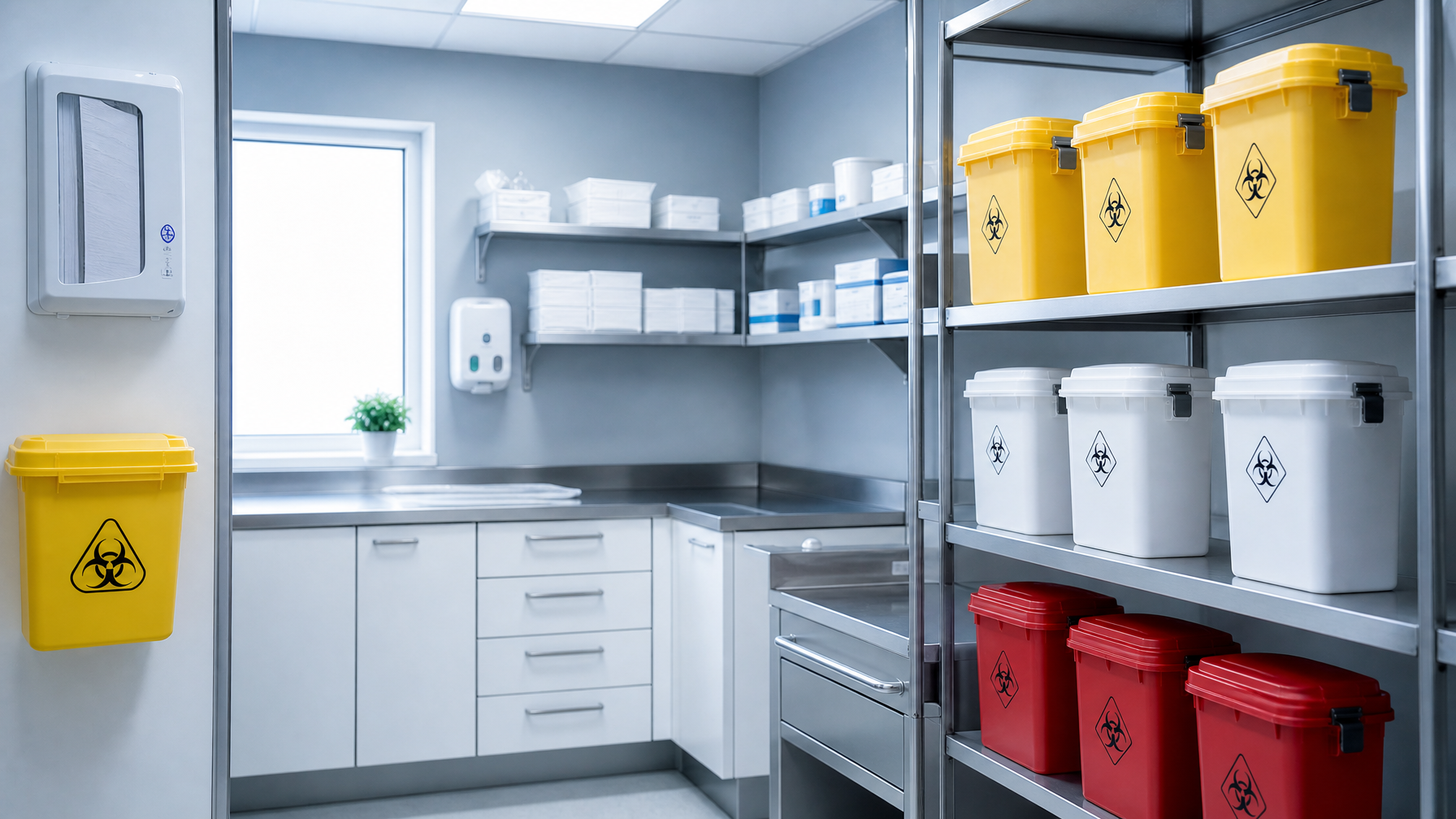
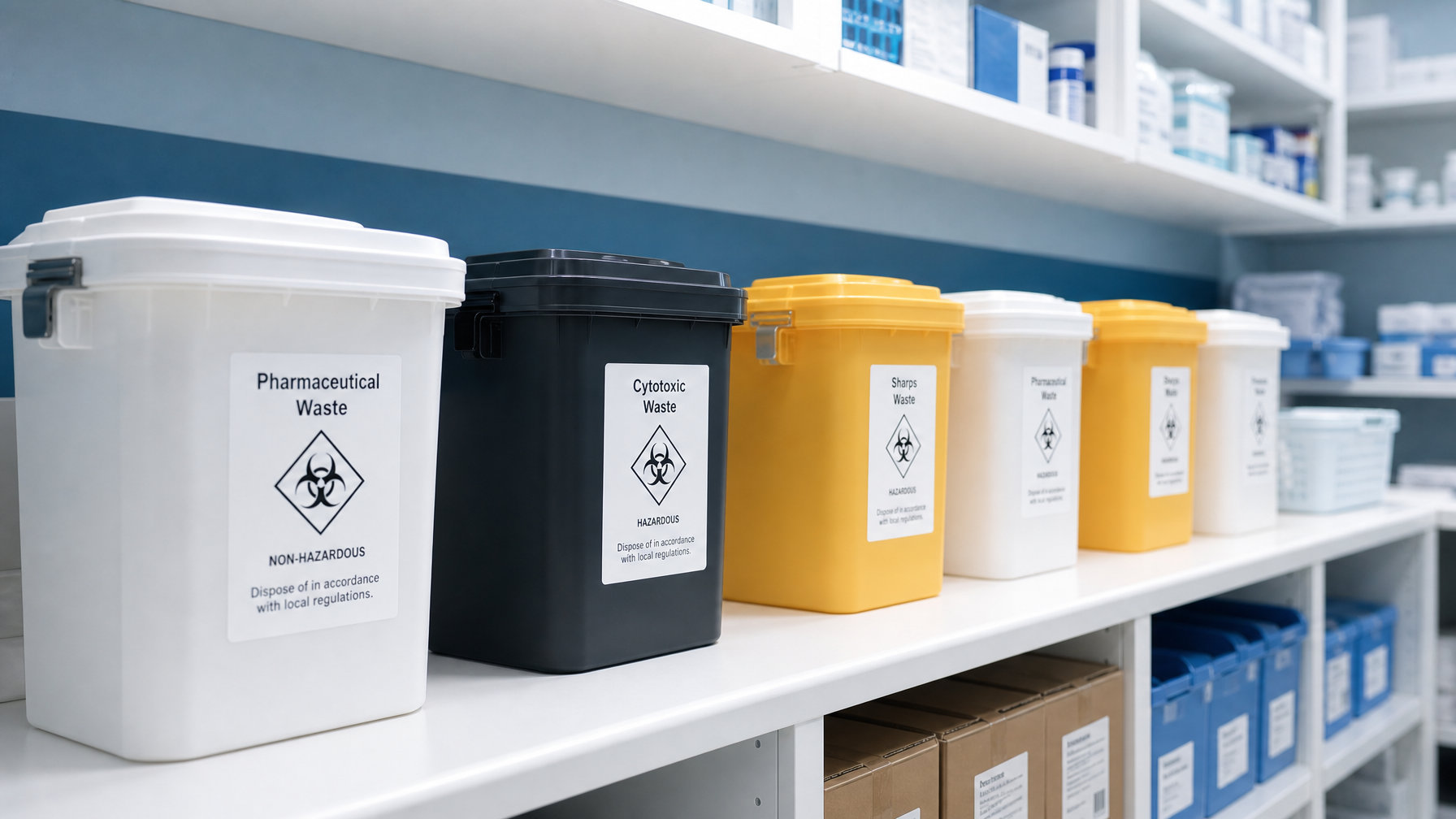
- Red or yellow, clearly labelled containers are for sharps
- Fill line equals stop line
- One container per station prevents walking with sharps
- Bracketed containers stay where you expect them
- Closed lid means ready for transport
Post a simple one page sign near each station. Update during audits. Keep training short and frequent.
Internal waste stream reminders
Sharps are one stream within your broader waste program. Keep your other streams separate. If you need a refresher on medical waste categories and safe handling, please contact us directly for current guidance.
Summary: make sharps safety simple and consistent
Place the right container at the right station. Use it immediately after use. Stop at the fill line. Close before moving. Replace without delay. Choose sizes and brackets that match each room. Train on do’s and don’ts during short huddles. Cobalt recommends the right mix after consultation and sets reliable pick-up routes across Alberta.