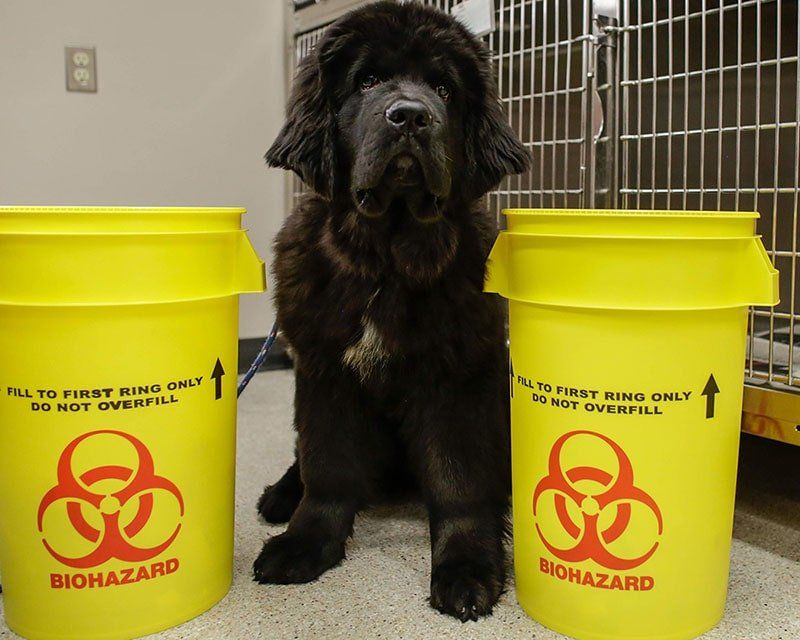
Trusted, Local Medical Waste Management
and Biohazard Waste Disposal
Offering complete sharps pick-up service and compliance solutions for your practice.
Request Service
Contact Us
Thank you for contacting us. We will get back to you as soon as possible.
Oops, there was an error sending your message.
Please try again later
Trusted, Local Medical Waste Management and Biohazard
Waste Disposal
Offering complete sharps pick-up service and compliance solutions for your practice
Welcome To
Cobalt Medical Solutions
Cobalt Medical Solutions is your dependable partner for comprehensive medical waste services. We specialize in safe, secure, and compliant biohazard waste pick up and management. Healthcare facilities, clinics, and businesses across the region rely on us for expert waste management medical services.
Are you searching for sharps container disposal near me or a reliable sharps container pick up service near me? Our local team is committed to providing prompt, scheduled, and emergency services. We handle everything from routine biohazard medical waste collection to specialized sharps disposal near me, ensuring you can focus on patient care.

Why Choose Us
Customers know they can count on Cobalt Medical Solutions to
consistently deliver on their biomedical and hazardous waste management. Explore what makes us different.
Why Choose Us
Customers know they can count on Cobalt Medical Solutions to consistently deliver on their biomedical and hazardous waste management. Explore what makes us different.
Operated With Purpose
Sean Gundry is the owner of Cobalt Medical Solutions, a company with deep roots in Alberta and a commitment to serving its community. A true Albertan, Sean was born and raised in Calgary. His strong connection to the region is evidenced by his education at Mount Royal University, where he earned a diploma in Broadcasting.
With two decades of experience in the construction industry, Sean brings a strong, hands-on work ethic to his role and understands the importance of working with suppliers as part of a team to deliver on client needs. Outside of work, his passions include music, cooking, and snowboarding. Known for being honest, open, and dependable, he is dedicated to upholding the company’s reputation for professionalism and integrity.
Under Sean’s leadership, Cobalt Medical Solutions continues the important work started by founder Ron Kitsul. Sean is committed to building on the company's strong foundation with a dedication to serving clients with the same level of integrity and trust they have come to expect. Sean's goal is to ensure Cobalt Medical Solutions remains a trusted and dependable partner in the Alberta market for years to come.
Testimonials

"Cobalt Medical Solutions Ltd. is very prompt and ready to help whenever we require his services at our office. His ability to perform the job with a high level of professionalism makes us always choose him for this particular job. Always with a positive attitude!"
Pamela Rodriguez

"We have done business with Cobalt Medical Solutions Ltd. for many years now. I have to say he is and has always been amazing to do business with. Always helpful and knowledgeable. We would highly recommend Cobalt Medical Solutions Ltd., you won't be disappointed."
Michale Bonn

"Had a hard time getting a company to come and remove our bio medical waste for our dental clinic. Called Cobalt Medical Solutions Ltd. and he came the next day. Ron is professional we highly recommend him for any kind of service you were looking for."
Gail Currie

"It has been a pleasure working with Cobalt Medical Solutions Ltd.! The service is friendly, timely and extremely reliable. I have complete trust that all of my requests will be handled quickly and efficiently. Ron has gone above and beyond countless times. I have no complaints and would highly recommend Cobalt Medical Solutions Ltd.!"
Grassroots Backup

"Cobalt Medical Solutions Ltd. has been taking care of our dental office for over a decade. Both efficient and reliable, Ron will be there when you need him. He is extremely professional and provides first class service. Highly Recommend!!"
Loretta McKay
The Cobalt Pulse:
Biomedical Waste Management News And Solutions

By Cobalt Medical Solutions
•
May 8, 2026
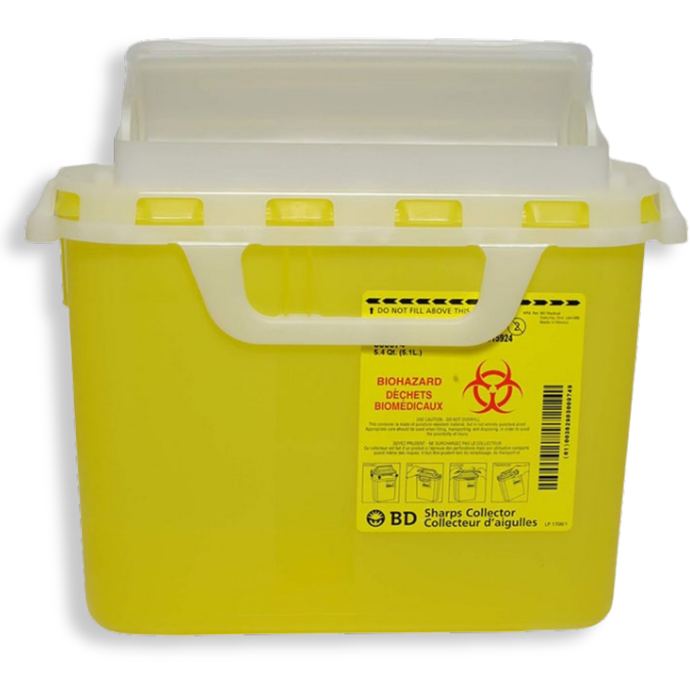
Dealing with a full sharps container is a responsibility that touches on safety, legal compliance, and the health of your community. If you’re in Alberta and wondering how to handle a full biohazard sharps container, you’re not alone. This guide will walk you through practical steps, options for biohazard waste disposal Alberta residents and businesses can rely on, and the importance of following proper sharps pick-up procedures. By understanding the process, you can ensure that used needles, syringes, lancets, and other sharp medical items are disposed of safely and legally. Understanding what qualifies as a sharps container A sharps container is a rigid, puncture-resistant container designed to hold needles, syringes, lancets, and other sharp medical waste. In Alberta, these containers must be leak-proof and labeled to indicate biohazard waste. The purpose of the container is to prevent injuries and limit exposure to potentially infectious materials. Knowing what qualifies as sharps helps you determine when it’s time to arrange a pick-up or drop-off. Needles and syringes Scalpels and lancets Suture and butterfly needles Anesthetic carpules and needles Orthodontic wires Endodontic files and reamers Burs and scalers Tattoo needles, cartridges and razor blades Piercing needles, dermal punches and tapers Broken glassware that is contaminated with blood or bodily fluids In basic terms, any sharp item that has been in contact with biological material should be included in a sharps container for proper disposal. If you’re unsure whether a item is considered sharps, treat it as such and seek guidance from your local waste management provider. Why proper disposal matters Biohazard sharps containers are not ordinary trash. Improper disposal can lead to needle-stick injuries, exposure to bloodborne pathogens, and contamination of waste facilities. In Alberta, there are strict regulations and best practices to ensure safe handling from the moment the container is filled to the point of disposal. By following the correct process, you protect yourself, sanitation workers, and the community. Reduces risk of injury during handling and transport Prevents environmental contamination Ensures compliance with provincial regulations Biohazard waste disposal service for Alberta For commercial facilities, ensuring a compliant biohazard waste disposal Alberta strategy is vital for maintaining workplace safety and meeting provincial environmental standards. Specialized providers offer professional biohazard sharps container pick up and sharps pick-up services specifically tailored for clinics, dental offices, and industrial sites. These services provide the necessary documetns and certificates of destruction required for regulatory audits, ensuring that all medical waste is transported and treated at licensed facilities. Businesses can choose between recurring scheduled collections or on-demand pick-up programs for lower-volume sites. Regardless of the frequency, a professional sharps pick-up ensures that puncture-resistant containers are handled correctly, mitigating the risk of needle-stick injuries and cross-contamination. Utilizing a dedicated partner for biohazard waste disposal in Alberta allows organizations to focus on their operations while remaining fully compliant . Steps to take when your sharps container is full When your container reaches capacity, it’s time to arrange a biohazard sharps container pick up. Follow these steps to ensure a safe and compliant process: Check the container’s labeling and packaging requirements. Do not overfill beyond the fill line; many containers indicate the maximum fill level. Seal the container securely and ensure the lid is closed tightly to prevent leakage and exposure. Contact a reputable disposal service like Cobalt Medical Solutions to schedule a pickup. Confirm that the service is licensed to handle biohazard waste disposal Alberta and that they will transport the container to an approved treatment facility. Keep documentation of the pickup or drop-off for your records and any regulatory compliance audits. What to ask when arranging a sharps pick-up If you’re engaging a biohazard waste disposal Alberta service, asking the right questions will save time and ensure proper handling: Are you licensed to handle biohazard waste disposal Alberta? Can you provide proof of licensing and transport permits? Do you offer biohazard sharps container pick up, and what is the typical turnaround time? What are the accepted types and sizes of containers? Do you have specific requirements for the container fill line and labeling? How should I prepare the container for pickup, and do you provide replacement containers? What is the treatment method (autoclave, incineration, or other) and final disposal destination? What are the costs, and do you have a record of disposal for compliance purposes? Sharps container and pick-up best practices Use puncture-resistant, properly labeled containers from reputable suppliers, and never reuse containers. Store full containers in a cool, dry place away from children and pets before disposal. Do not compact, crush, or break the container, as this increases the risk of exposure. Implement a formal waste management policy with designated collection points and trained staff. Consider education resources from health authorities to stay updated on any changes to Alberta’s rules around biohazard waste disposal. Final thoughts Handling a full sharps container in Alberta is a responsibility that protects you and those around you. By understanding what qualifies as sharps, recognizing the importance of proper disposal, and knowing your options for biohazard waste disposal Alberta, you can navigate the process with confidence. Regardless of the size or type of commercial operation you represent, choosing a compliant, licensed pathway ensures safe transport to an approved treatment facility. Remember to keep receipts of each disposal event for your records and for any potential regulatory checks. Keeping our communities safe starts with small, careful steps, like choosing the right biohazard sharps container pick up method and staying informed about local rules.

By Cobalt Medical Solution
•
March 19, 2026
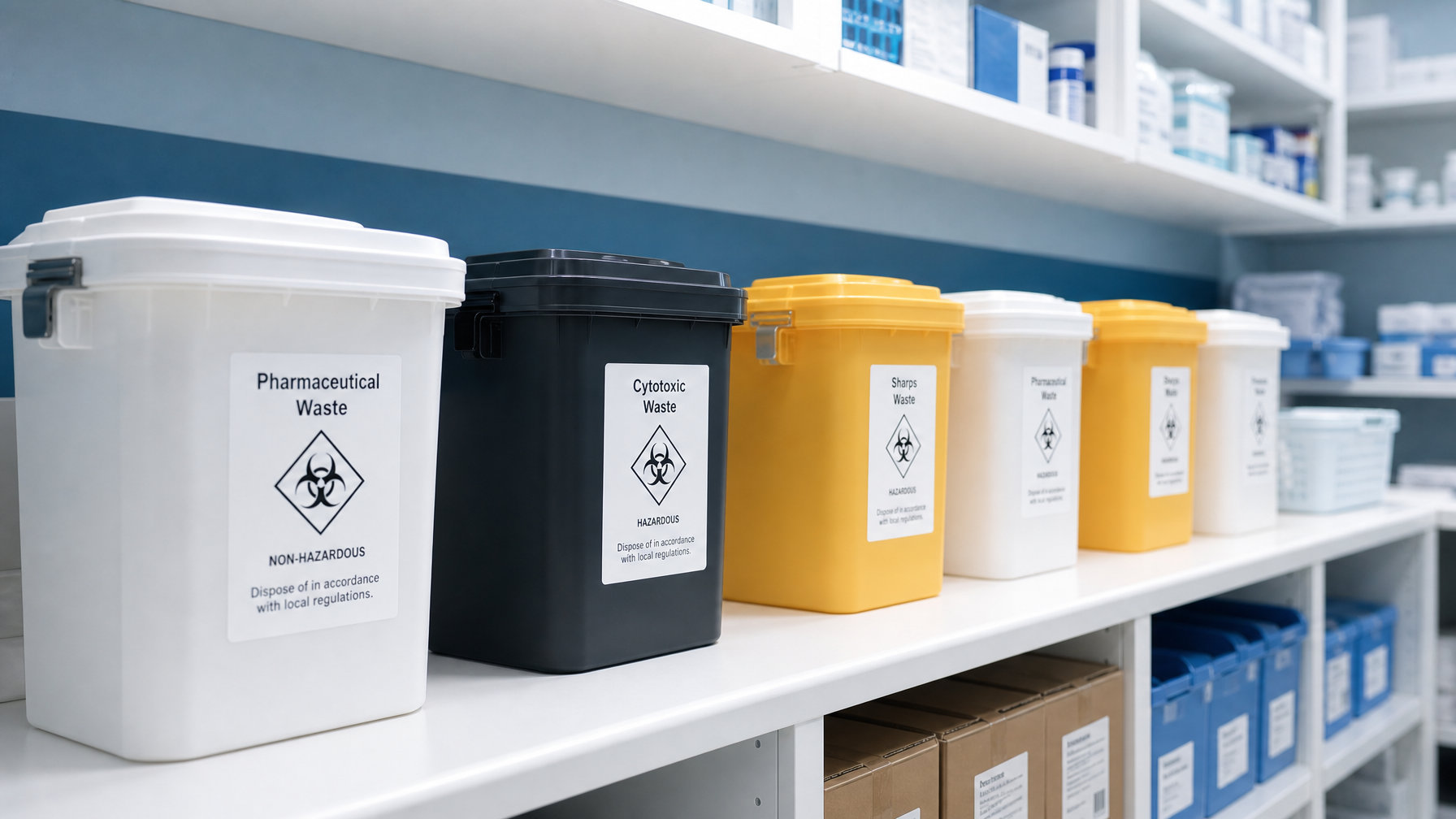
Pharmacies and clinics handle medicines every day. Most days are routine. Some days are messy. Expired vials appear. A patient returns a mixed bag of tablets. A controlled substance is partly used and logged. You need a clear, compliant next step that protects staff, patients, and the environment. This guide keeps it simple. It explains what goes where. It shows how to separate hazardous and non-hazardous pharmaceuticals. It covers controlled substances, containment, documentation, and pick-ups. It also includes a practical decision tree you can use in huddles and training. Cobalt Medical Solutions serves Alberta. The team designs compliant workflows, supplies the right containers, and runs scheduled routes across the province. You get steady service and clear records for inspections. Why flushing or trashing is not compliant Do not flush medications. Do not throw medications into regular garbage. Flushing sends active ingredients into waterways. Trash places drugs in open systems and risks diversion and exposure. Both are typically non-compliant with environmental and healthcare guidelines. Regulators and manufacturers expect secure containment, documented chain of custody, and approved treatment. If you are unsure about a product, ask for help. Local guidance can vary. Cobalt provides consulting to identify streams and set the correct container at the point of use. Hazardous vs non-hazardous pharmaceuticals Not all medicines are handled the same way. Categorization drives the container, label, and final treatment. Hazardous pharmaceutical waste : medicines that are ignitable, corrosive, reactive, or toxic, or that meet cytotoxic or chemotherapy criteria. Examples often include certain chemotherapy agents, warfarin at specific concentrations, nicotine-containing products, and mercury-containing items. These require dedicated hazardous pharmaceutical containers, clear labeling, and strict controls to prevent exposure and cross-contamination. Non-hazardous pharmaceutical waste : over-the-counter items and many prescription drugs that do not meet hazardous criteria. These still require secure, tamper-evident containment and documented disposal, but follow different treatment routes. When in doubt, default to caution and consult your hazardous list or your provider. Cobalt can review formularies, quick-reference sheets, and room workflows so the correct container is always within reach. Controlled substances: special considerations Controlled substances need two layers of care. You must meet diversion controls and you must meet waste rules. Typical steps include witness verification for partial doses, secure temporary storage in a locked cabinet, and transfer to a compliant destruction pathway. Never flush a controlled substance. Never place it in open trash. Keep logs complete and legible. Store records where they are available for audits. Cobalt designs controlled-substance workflows that match your practice setting. This includes secure containment, signage, and practical handoff steps that fit your charting patterns. A quick decision tree you can use today Use this plain-language sequence at the bench or med room. Is the medication a controlled substance? Yes : complete witness steps per policy, document quantity remaining, place in the controlled-substance waste container, secure storage, schedule removal. No : go to the next question. Is it hazardous pharmaceutical waste per your list? Yes : place in the hazardous pharmaceutical container with the correct liner and label. No : place in the non-hazardous pharmaceutical container. Is it a sharp or contains a sharp component? Yes : place the sharp in a certified sharps container at point of use. If it also contains pharmaceutical residue, use a sharps container approved for pharmaceutical sharps. No : proceed as above. Is it a liquid or gel? Use a leak-resistant, lined container. Keep caps tight. Do not mix incompatible liquids. Handling expired, partially used, and patient-returned items Expired medications should be removed from active stock promptly. Store them in a clearly labeled, segregated area. Use the appropriate pharmaceutical waste container. Keep a simple tally sheet or barcode scan record for quantity and lot tracking. Partially used medications should be capped, kept upright, and placed in the correct container as soon as practical after patient care is complete. For controlled substances, follow the double-check and documentation policy before placing in controlled-substance waste. Patient-returned medications must never be re-dispensed. Assess the type on return. Separate controlled, hazardous, and non-hazardous items. Log the return, note the patient name and item details as your policy allows, then stage in the correct container. Keep returns in a locked location until removal. Container recommendations and placement Place the right container at the point of decision. This reduces handling and errors. Non-hazardous pharmaceuticals : use a rigid, tamper-evident pharmaceutical waste container with an inner liner. Suitable for most tablets, capsules, and non-hazardous liquids in sealed containers. Hazardous pharmaceuticals : use containers rated for hazardous pharmaceutical waste with clear labels. Keep separate from other streams. Line with the correct bag type per your policy. Controlled substances : use a locked, access-restricted container system that supports witnessed deposits and clear documentation. Store in a locked cabinet or room. Pharmaceutical sharps : use a certified, puncture-resistant sharps container that is compatible with pharmaceutical residues. Mount at point of use within arm’s reach. Follow fill-line guidance. Stop around three-quarters full. Close lids between uses. Replace without delay. Cobalt supplies containers, liners, and brackets and keeps inventory spares on hand so you do not run short. Documentation and audit-ready records Keep documentation simple and consistent. Your records should show what was generated, when it was contained, and when it left your site. Maintain a log or digital record for expired, partially used, and patient-returned items. Capture item name, form, quantity, and date. Keep chain-of-custody paperwork from pick-up to final treatment. Store copies in a central file. Post brief, one-page station signs that map item types to containers. Train in short pre-shift huddles. During inspections, produce your logs, manifests, and training records. Cobalt can produce proof of pick-up on request. How Cobalt coordinates safe, scheduled removal across Alberta Cobalt runs reliable routes province-wide and adjusts cadence to your ebb and flow. Service starts when you request service on the site. You receive an acknowledgement. The team follows up to confirm timing. Containers are supplied as needed. Pick-ups can be scheduled automatic on the agreed schedule so you do not have to call each time. If volumes change, the schedule is updated. If weather or access issues arise, emergency service and rescheduling support are available. Using a local Alberta provider reduces transport distance and aligns with provincial expectations. Regular routes cover Calgary, Edmonton, Red Deer, Lethbridge, Medicine Hat and rural areas including Bow Valley. The focus is steady service, safety, and clear documentation. Short FAQ Q/ How should expired or patient-returned medications be handled and stored? A/ Remove from active stock. Segregate by type. Use the correct pharmaceutical or controlled-substance container. Keep in a locked area. Log details for audits. Do not flush. Do not trash. Q/ What differentiates hazardous from non-hazardous pharmaceutical waste? A/ Hazardous waste meets criteria such as toxicity or cytotoxic properties and requires dedicated containers and treatment. Non-hazardous items do not meet those criteria but still need secure, documented disposal. Q/ How can clinics document and track pharmaceutical waste for audits? A/ Keep a consistent log of items, dates, quantities, and container types. Retain chain-of-custody records like invoices. Use simple station signage and brief training notes. Q/ What container solutions are recommended for different medication types? A/ Use hazardous pharmaceutical containers for hazardous items, rigid pharmaceutical containers for non-hazardous items, locked containers for controlled substances, and certified sharps containers at point of use for pharmaceutical sharps. Q/ How does Cobalt coordinate safe, scheduled removal province-wide? A/ Routes run across Alberta on set schedules matched to your volume. You request service, receive confirmation, and pickups occur automatically. The team supplies containers, documentation, and emergency support when needed. Next steps If you need help setting up compliant pharmaceutical waste workflows, Cobalt can help. The team will review your streams, place the right containers, and align pick-ups to your schedule. Learn more about disposing of medical waste and broader medical waste guidance on the Cobalt Medical Solutions website, then request service to get started.

By Cobalt Medical Solutions
•
February 4, 2026
As the year starts to unfold, it is a good time to review waste practices. Alberta clinics face winter conditions, busy schedules, and evolving expectations around safety. This guide gives you practical steps for 2026, focused on dental streams that matter day to day. You will find clear containment advice, documentation tips, and winter planning. You will also see where value recovery is possible and how Cobalt Medical Solutions can tailor containers and pick-ups to your practice. Dental waste streams that need special handling in Alberta Certain materials from dental care need controlled containment, transport, and disposal. In Alberta, the following streams require special handling: Amalgam, including capsules, chairside traps, vacuum pump filters, and sludge from amalgam separators X-ray related materials, including lead foil, fixer, and developer, where used Sharps, including needles, scalers, burs, endo files, orthodontic wires, and suture needles Blood-soaked and potentially infectious materials, including gauze and suction canister contents Pharmaceutical items, including expired anaesthetics and partially used carpules Pathological tissue, if applicable to your scope of practice Aerosol and pressurised containers, if used in clinical areas Disinfectant chemicals and mercury-containing devices These items fall under regulated categories such as biomedical and hazardous waste. They require approved containers and a documented chain of custody from your clinic to final treatment. Amalgam containment and documentation Amalgam remains a top priority for dental compliance. Here is a simple, Alberta-ready workflow: Segregate at source. Keep amalgam capsules, chairside traps, vacuum pump filters, and separator sludge out of regular garbage and out of red bag biomedical waste. Use closed, mercury vapour resistant containers. Keep them sealed, labelled with contents, clinic name, and accumulation start date. Maintain an amalgam separator that meets ISO 11143 and manufacturer maintenance schedules. Log inspections and cartridge changes. Never rinse amalgam waste down drains. Wipe up particles with disposable towels, then place the towels in the amalgam container if they are contaminated with amalgam. Keep a chain-of-custody file. Save pick-up manifests, container serials, weights, and final treatment certificates. Store records for the period required by your college or insurer. Cobalt supplies the appropriate amalgam containers and manages the paperwork. After pick-up, you receive documentation that traces the material from your site to final processing. X-ray fixer, developer, and lead foil Digital systems are common, but many Alberta clinics still use film at least part-time. If this is you, handle these items with care: Lead foil: Store in a rigid, labelled container for lead recycling. Do not place with sharps or red bag waste. Fixer: Treat as a hazardous silver-bearing solution. Accumulate in a closed, compatible carboy with a secure cap. We can deploy an onsite silver recovery unit or collect bulk fixer for processing. Developer: Manage as hazardous due to high pH and chemical content. Keep separate from fixer to avoid reactions. Darkroom residues: Keep absorbents and wipes used for spills in compatible containers, then mark for chemical disposal. Keep all shipping papers and recycling confirmations with your waste file. This is part of your chain of custody and supports audits. Blood-soaked materials and red bag waste Use red or clearly marked biomedical bags for saturated gauze, suction canister liners, and PPE contaminated with blood or saliva. Place filled bags into approved secondary containers for transport. Close bags when three quarters full to prevent spills. Do not overfill. Keep sharps out of these bags. Sharps, burs, and blades Place needles, burs, endo files, and scalpel blades directly into puncture resistant, leak resistant sharps containers at point of use. Wall-mount where possible to reduce needlestick risks. Close containers when they reach the fill line. Never recap by hand. Do not mix with other waste streams. Chain of custody, simplified Your records should show a complete path from generation to final treatment. Keep the following: Container IDs, content labels, and start dates Pick-up dates and quantities Shipping papers and manifests Treatment or recycling certificates Cobalt provides all related documents after each service. We are available 24 hours if you need copies for an inspection. Winter pick-up planning for multi-chair practices Alberta winters can affect access and timing. For a 6 to 12 chair clinic, we suggest this baseline plan from December through March: Sharps: every 4 to 6 weeks; increase to every 3 to 4 weeks during hygiene or surgical peaks Red bag biomedical: every 2 to 4 weeks, depending on procedure mix and storage space Amalgam and x-ray waste: on demand or quarterly, aligned with separator maintenance and film usage Pharmaceutical returns: quarterly or as needed after inventory checks Build in buffer capacity. Keep at least one spare sharps container per operatory and one extra red bag case in storage. Schedule pick-ups earlier in the week and earlier in the day to avoid weather-related delays. Confirm building access, parking clearance, and elevator availability on service days. If storms hit, we offer emergency service and rescheduling support. Can precious metals be recovered? Yes. Select dental waste contains recoverable silver and other precious metals: X-ray fixer holds silver that can be recovered via onsite or offsite processes Lead foil is recyclable Certain amalgam streams can include precious metal content suitable for value recovery, depending on composition and processing route Cobalt offers precious metal purchasing where applicable. We assess your streams, estimate recoverable content, and provide purchase terms. How Cobalt customises containers and schedules Every practice is different. We start with a short consultation to review: Chair count, procedure mix, and sterilisation workflow Amalgam separator type and maintenance cycle Imaging systems, including film volumes if applicable Storage space, access, and winter constraints Preferred service days and staff routines Then we match containers and cadence. For example, a busy 8-chair clinic may use wall-mounted 5-litre sharps units in operatories, a larger central sharps container in sterilisation, monthly biomedical bag collection, and quarterly amalgam service aligned with separator cartridge changes. A smaller 3-chair practice may prefer bi-monthly sharps service and on-demand chemical waste collection. We supply all containers, brackets, and liners, and we keep inventory spares on hand to minimise disruption. Practical checklist Confirm container placement, fill lines, and labels Verify amalgam separator maintenance dates and logbook Review red bag and sharps capacity against winter schedule Stage lead foil and fixer containers near imaging areas File last year’s manifests and request any missing certificates Book winter pick-ups with buffer days and spare containers Summary Staying compliant in 2026 comes down to clean segregation, the right containers, and reliable documentation. Focus on amalgam, x-ray materials, sharps, and blood-soaked waste. Plan a winter schedule with buffer capacity and early-week service windows. Where possible, recover value from silver-bearing and metal-containing streams. Cobalt Medical Solutions provides Alberta-specific consulting, container supply, scheduled and emergency service, and precious metal purchasing where applicable. Contact us to set up a tailored plan that fits your chairs, your space, and your season.
Testimonials

"Cobalt Medical Solutions Ltd. is very prompt and ready to help whenever we require his services at our office. His ability to perform the job with a high level of professionalism makes us always choose him for this particular job. Always with a positive attitude!"
Pamela Rodriguez

"We have done business with Cobalt Medical Solutions Ltd. for many years now. I have to say he is and has always been amazing to do business with. Always helpful and knowledgeable. We would highly recommend Cobalt Medical Solutions Ltd., you won't be disappointed."
Michale Bonn

"Had hard time getting a company to come and remove our bio medical waste for our dental clinic. Called Cobalt Medical Solutions Ltd. and he came the next day. Ron is professional we highly recommend him for any kind of service you were looking for."
Gail Currie

"It has been a pleasure working with Cobalt Medical Solutions Ltd.! The service is friendly, timely and extremely reliable. I have complete trust that all of my requests will be handled quickly and efficiently. Ron has gone above and beyond countless times. I have no complaints and would highly recommend Cobalt Medical Solutions Ltd.!"
Grassroots Backup

"Cobalt Medical Solutions Ltd. has been taking care of our dental office for over a decade. Both efficient and reliable, Ron will be there when you need him. He is extremely professional and provides first class service. Highly Recommend!!"
Loretta McKay
Our Gallery
We meet amazing businesses on our journeys across Alberta. We can't help but take a few pictures now and then.
Our Gallery
We meet amazing businesses on our journeys across Alberta. We can't help but take a few pictures now and then.