Dental Waste Disposal In Alberta: Amalgam, X-Ray, And Sharps Compliance For 2026
As the year starts to unfold, it is a good time to review waste practices. Alberta clinics face winter conditions, busy schedules, and evolving expectations around safety. This guide gives you practical steps for 2026, focused on dental streams that matter day to day. You will find clear containment advice, documentation tips, and winter planning. You will also see where value recovery is possible and how Cobalt Medical Solutions can tailor containers and pick-ups to your practice.
Dental waste streams that need special handling in Alberta
Certain materials from dental care need controlled containment, transport, and disposal. In Alberta, the following streams require special handling:
- Amalgam, including capsules, chairside traps, vacuum pump filters, and sludge from amalgam separators
- X-ray related materials, including lead foil, fixer, and developer, where used
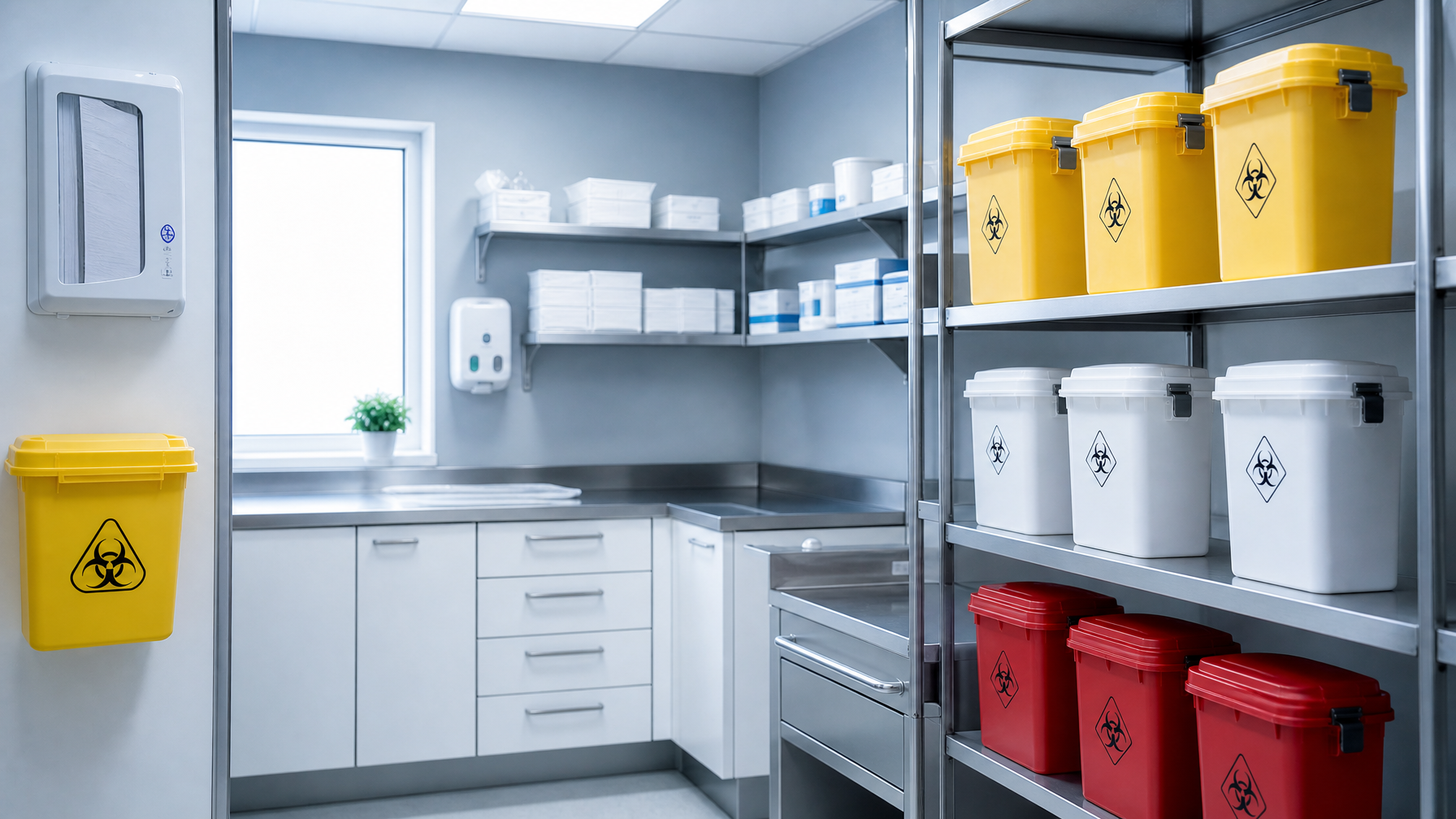
- Sharps, including needles, scalers, burs, endo files, orthodontic wires, and suture needles
- Blood-soaked and potentially infectious materials, including gauze and suction canister contents
- Pharmaceutical items, including expired anaesthetics and partially used carpules
- Pathological tissue, if applicable to your scope of practice
- Aerosol and pressurised containers, if used in clinical areas
- Disinfectant chemicals and mercury-containing devices
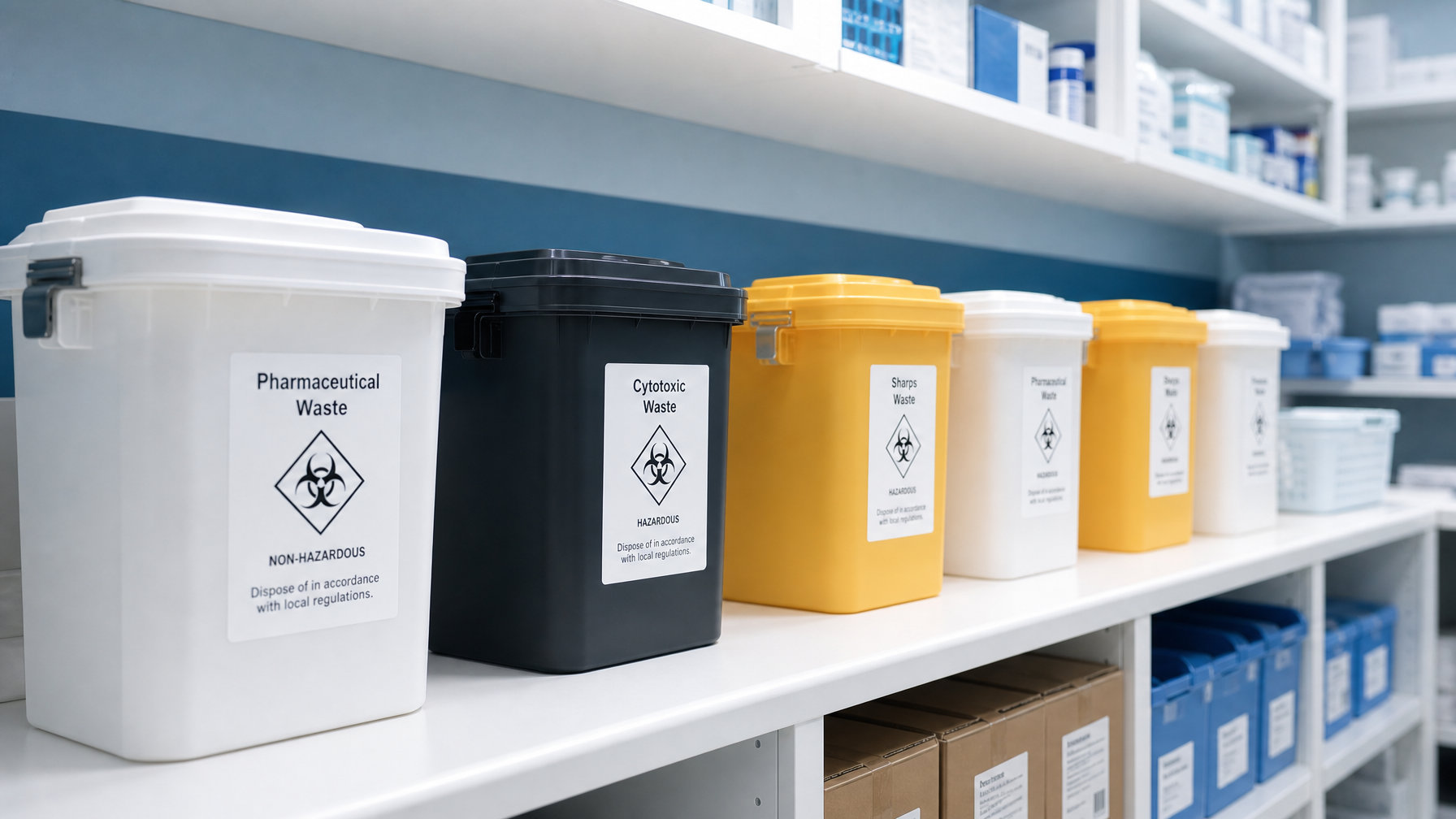
These items fall under regulated categories such as biomedical and hazardous waste. They require approved containers and a documented chain of custody from your clinic to final treatment.
Amalgam containment and documentation
Amalgam remains a top priority for dental compliance. Here is a simple, Alberta-ready workflow:
- Segregate at source. Keep amalgam capsules, chairside traps, vacuum pump filters, and separator sludge out of regular garbage and out of red bag biomedical waste.
- Use closed, mercury vapour resistant containers. Keep them sealed, labelled with contents, clinic name, and accumulation start date.
- Maintain an amalgam separator that meets ISO 11143 and manufacturer maintenance schedules. Log inspections and cartridge changes.
- Never rinse amalgam waste down drains. Wipe up particles with disposable towels, then place the towels in the amalgam container if they are contaminated with amalgam.
- Keep a chain-of-custody file. Save pick-up manifests, container serials, weights, and final treatment certificates. Store records for the period required by your college or insurer.
- Cobalt supplies the appropriate amalgam containers and manages the paperwork. After pick-up, you receive documentation that traces the material from your site to final processing.
X-ray fixer, developer, and lead foil
Digital systems are common, but many Alberta clinics still use film at least part-time. If this is you, handle these items with care:
- Lead foil: Store in a rigid, labelled container for lead recycling. Do not place with sharps or red bag waste.
- Fixer: Treat as a hazardous silver-bearing solution. Accumulate in a closed, compatible carboy with a secure cap. We can deploy an onsite silver recovery unit or collect bulk fixer for processing.
- Developer: Manage as hazardous due to high pH and chemical content. Keep separate from fixer to avoid reactions.
- Darkroom residues: Keep absorbents and wipes used for spills in compatible containers, then mark for chemical disposal.
- Keep all shipping papers and recycling confirmations with your waste file. This is part of your chain of custody and supports audits.
- Blood-soaked materials and red bag waste
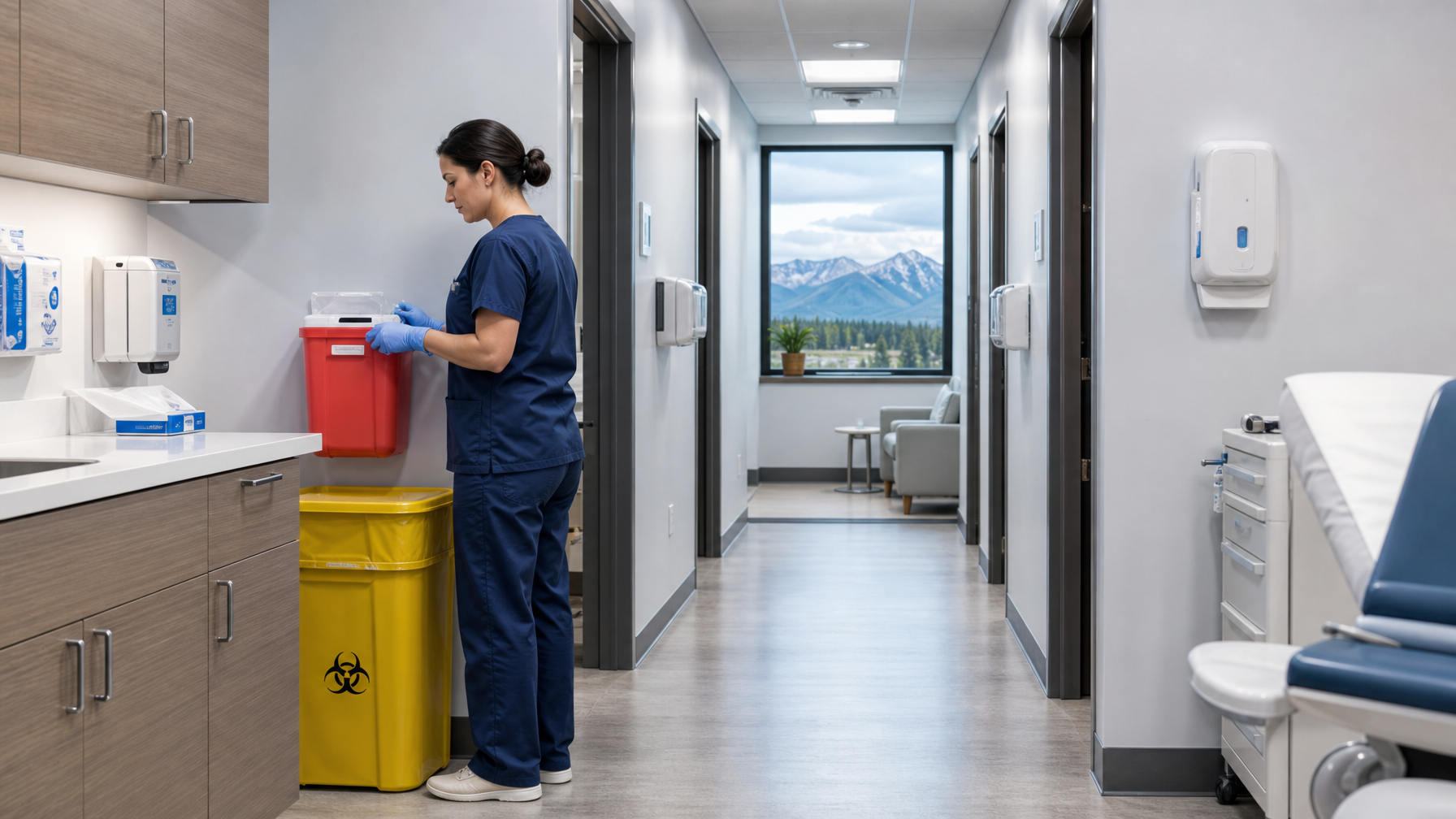
- Use red or clearly marked biomedical bags for saturated gauze, suction canister liners, and PPE contaminated with blood or saliva. Place filled bags into approved secondary containers for transport. Close bags when three quarters full to prevent spills. Do not overfill. Keep sharps out of these bags.
Sharps, burs, and blades
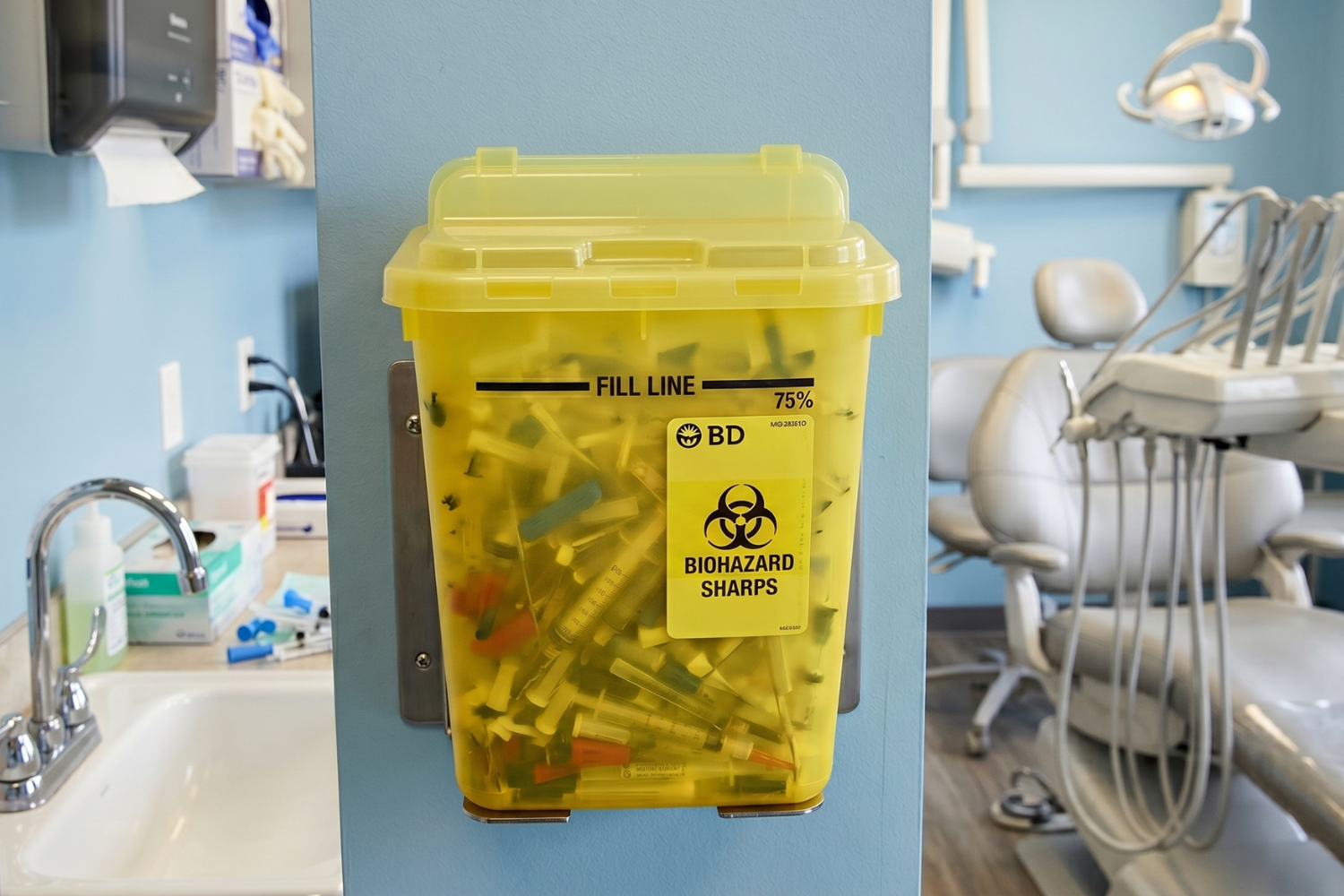
Place needles, burs, endo files, and scalpel blades directly into puncture resistant, leak resistant sharps containers at point of use. Wall-mount where possible to reduce needlestick risks. Close containers when they reach the fill line. Never recap by hand. Do not mix with other waste streams.
Chain of custody, simplified
Your records should show a complete path from generation to final treatment. Keep the following:
- Container IDs, content labels, and start dates
- Pick-up dates and quantities
- Shipping papers and manifests
- Treatment or recycling certificates
Cobalt provides all related documents after each service. We are available 24 hours if you need copies for an inspection.
Winter pick-up planning for multi-chair practices
Alberta winters can affect access and timing. For a 6 to 12 chair clinic, we suggest this baseline plan from December through March:
- Sharps: every 4 to 6 weeks; increase to every 3 to 4 weeks during hygiene or surgical peaks
- Red bag biomedical: every 2 to 4 weeks, depending on procedure mix and storage space
- Amalgam and x-ray waste: on demand or quarterly, aligned with separator maintenance and film usage
- Pharmaceutical returns: quarterly or as needed after inventory checks
Build in buffer capacity. Keep at least one spare sharps container per operatory and one extra red bag case in storage. Schedule pick-ups earlier in the week and earlier in the day to avoid weather-related delays. Confirm building access, parking clearance, and elevator availability on service days. If storms hit, we offer emergency service and rescheduling support.
Can precious metals be recovered?
Yes. Select dental waste contains recoverable silver and other precious metals:
- X-ray fixer holds silver that can be recovered via onsite or offsite processes
- Lead foil is recyclable
- Certain amalgam streams can include precious metal content suitable for value recovery, depending on composition and processing route
Cobalt offers precious metal purchasing where applicable. We assess your streams, estimate recoverable content, and provide purchase terms.
How Cobalt customises containers and schedules
Every practice is different. We start with a short consultation to review:
- Chair count, procedure mix, and sterilisation workflow
- Amalgam separator type and maintenance cycle
- Imaging systems, including film volumes if applicable
- Storage space, access, and winter constraints
- Preferred service days and staff routines
Then we match containers and cadence. For example, a busy 8-chair clinic may use wall-mounted 5-litre sharps units in operatories, a larger central sharps container in sterilisation, monthly biomedical bag collection, and quarterly amalgam service aligned with separator cartridge changes. A smaller 3-chair practice may prefer bi-monthly sharps service and on-demand chemical waste collection. We supply all containers, brackets, and liners, and we keep inventory spares on hand to minimise disruption.
Practical checklist
- Confirm container placement, fill lines, and labels
- Verify amalgam separator maintenance dates and logbook
- Review red bag and sharps capacity against winter schedule
- Stage lead foil and fixer containers near imaging areas
- File last year’s manifests and request any missing certificates
- Book winter pick-ups with buffer days and spare containers
Summary
Staying compliant in 2026 comes down to clean segregation, the right containers, and reliable documentation. Focus on amalgam, x-ray materials, sharps, and blood-soaked waste. Plan a winter schedule with buffer capacity and early-week service windows. Where possible, recover value from silver-bearing and metal-containing streams. Cobalt Medical Solutions provides Alberta-specific consulting, container supply, scheduled and emergency service, and precious metal purchasing where applicable. Contact us to set up a tailored plan that fits your chairs, your space, and your season.