Pharmaceutical waste management: keeping your clinic compliant and safe
Pharmacies and clinics handle medicines every day. Most days are routine. Some days are messy. Expired vials appear. A patient returns a mixed bag of tablets. A controlled substance is partly used and logged. You need a clear, compliant next step that protects staff, patients, and the environment.
This guide keeps it simple. It explains what goes where. It shows how to separate hazardous and non-hazardous pharmaceuticals. It covers controlled substances, containment, documentation, and pick-ups. It also includes a practical decision tree you can use in huddles and training.
Cobalt Medical Solutions serves Alberta. The team designs compliant workflows, supplies the right containers, and runs scheduled routes across the province. You get steady service and clear records for inspections.
Why flushing or trashing is not compliant
Do not flush medications. Do not throw medications into regular garbage. Flushing sends active ingredients into waterways. Trash places drugs in open systems and risks diversion and exposure. Both are typically non-compliant with environmental and healthcare guidelines. Regulators and manufacturers expect secure containment, documented chain of custody, and approved treatment.
If you are unsure about a product, ask for help. Local guidance can vary. Cobalt provides consulting to identify streams and set the correct container at the point of use.
Hazardous vs non-hazardous pharmaceuticals
Not all medicines are handled the same way. Categorization drives the container, label, and final treatment.
- Hazardous pharmaceutical waste: medicines that are ignitable, corrosive, reactive, or toxic, or that meet cytotoxic or chemotherapy criteria. Examples often include certain chemotherapy agents, warfarin at specific concentrations, nicotine-containing products, and mercury-containing items. These require dedicated hazardous pharmaceutical containers, clear labeling, and strict controls to prevent exposure and cross-contamination.
- Non-hazardous pharmaceutical waste: over-the-counter items and many prescription drugs that do not meet hazardous criteria. These still require secure, tamper-evident containment and documented disposal, but follow different treatment routes.
When in doubt, default to caution and consult your hazardous list or your provider. Cobalt can review formularies, quick-reference sheets, and room workflows so the correct container is always within reach.
Controlled substances: special considerations
Controlled substances need two layers of care. You must meet diversion controls and you must meet waste rules. Typical steps include witness verification for partial doses, secure temporary storage in a locked cabinet, and transfer to a compliant destruction pathway. Never flush a controlled substance. Never place it in open trash. Keep logs complete and legible. Store records where they are available for audits.
Cobalt designs controlled-substance workflows that match your practice setting. This includes secure containment, signage, and practical handoff steps that fit your charting patterns.
A quick decision tree you can use today
Use this plain-language sequence at the bench or med room.
Is the medication a controlled substance?
Yes: complete witness steps per policy, document quantity remaining, place in the controlled-substance waste container, secure storage, schedule removal.
No: go to the next question.
Is it hazardous pharmaceutical waste per your list?
Yes: place in the hazardous pharmaceutical container with the correct liner and label.
No: place in the non-hazardous pharmaceutical container.
Is it a sharp or contains a sharp component?
Yes: place the sharp in a certified sharps container at point of use. If it also contains pharmaceutical residue, use a sharps container approved for pharmaceutical sharps.
No: proceed as above.
Is it a liquid or gel?
Use a leak-resistant, lined container. Keep caps tight. Do not mix incompatible liquids.
Handling expired, partially used, and patient-returned items
Expired medications should be removed from active stock promptly. Store them in a clearly labeled, segregated area. Use the appropriate pharmaceutical waste container. Keep a simple tally sheet or barcode scan record for quantity and lot tracking.
Partially used medications should be capped, kept upright, and placed in the correct container as soon as practical after patient care is complete. For controlled substances, follow the double-check and documentation policy before placing in controlled-substance waste.
Patient-returned medications must never be re-dispensed. Assess the type on return. Separate controlled, hazardous, and non-hazardous items. Log the return, note the patient name and item details as your policy allows, then stage in the correct container. Keep returns in a locked location until removal.
Container recommendations and placement
Place the right container at the point of decision. This reduces handling and errors.
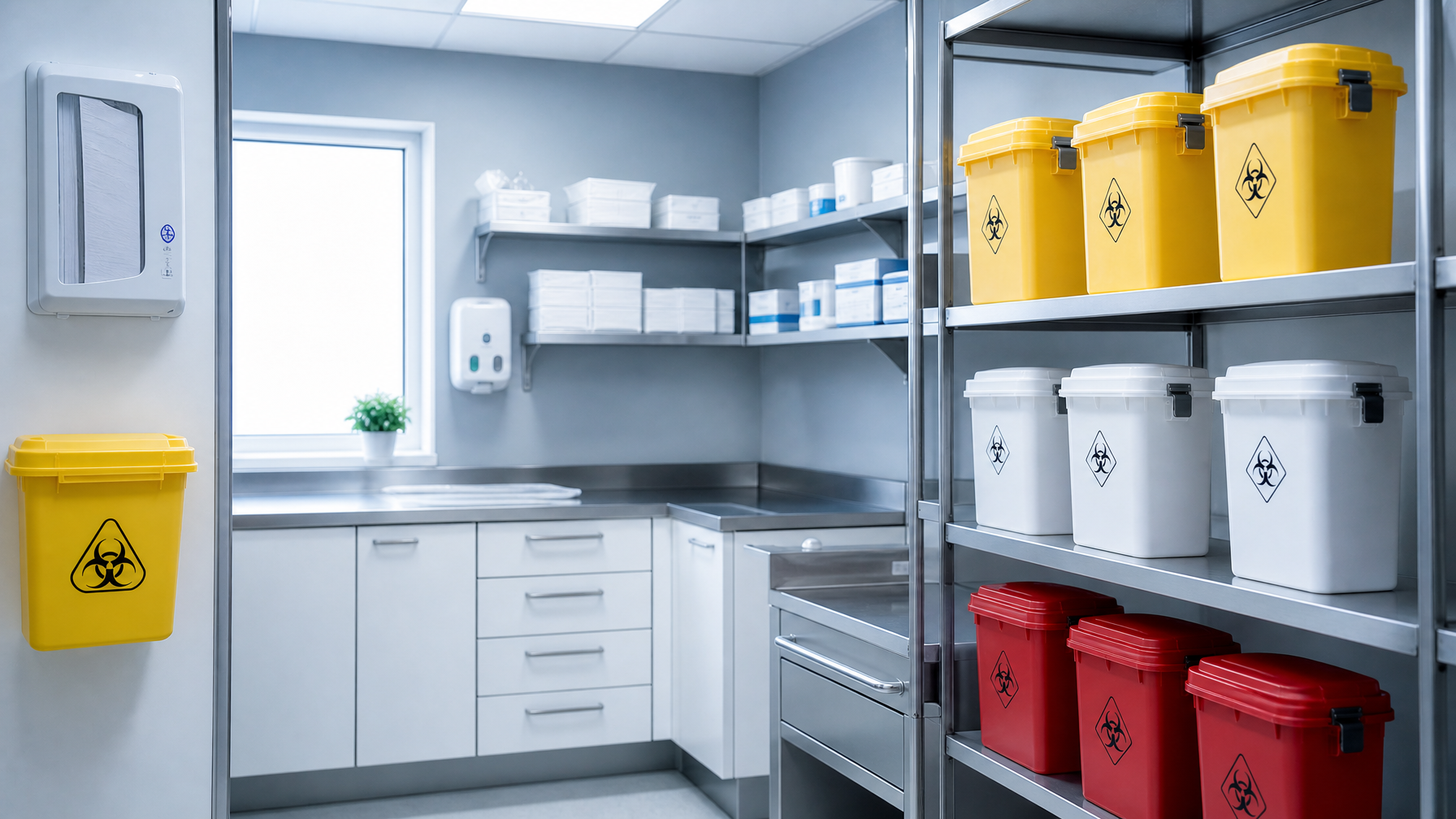
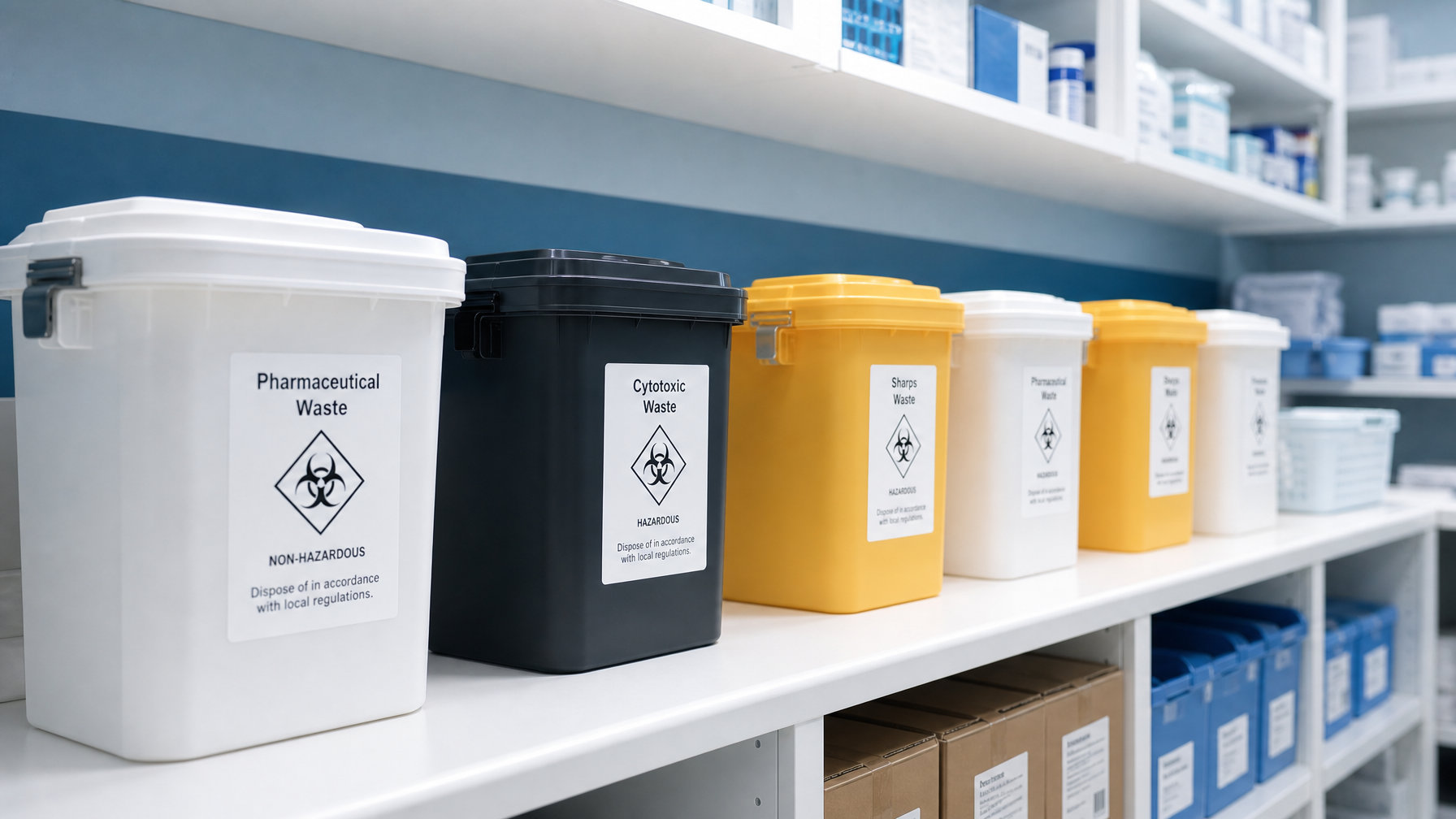
- Non-hazardous pharmaceuticals: use a rigid, tamper-evident pharmaceutical waste container with an inner liner. Suitable for most tablets, capsules, and non-hazardous liquids in sealed containers.
- Hazardous pharmaceuticals: use containers rated for hazardous pharmaceutical waste with clear labels. Keep separate from other streams. Line with the correct bag type per your policy.
- Controlled substances: use a locked, access-restricted container system that supports witnessed deposits and clear documentation. Store in a locked cabinet or room.
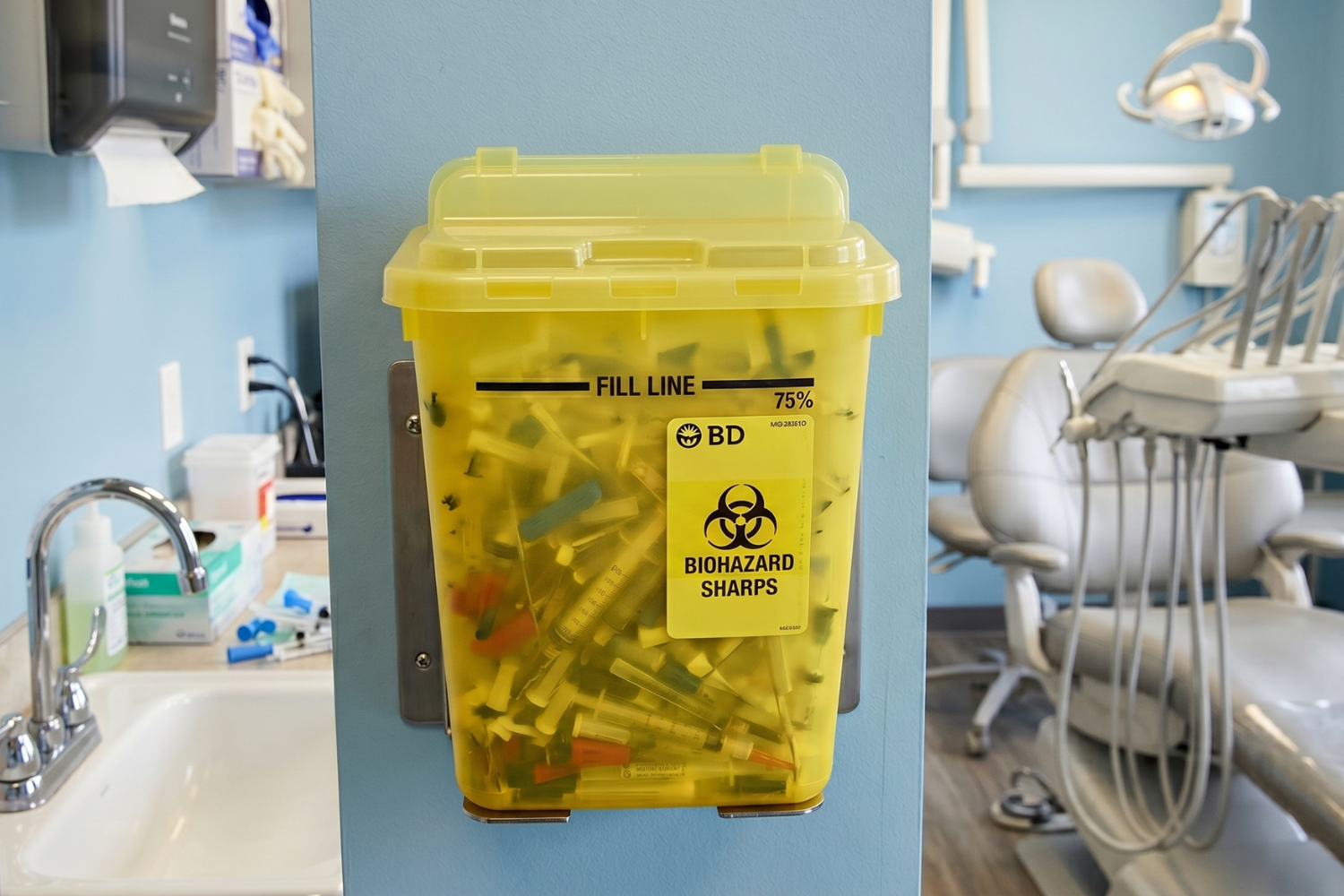
- Pharmaceutical sharps: use a certified, puncture-resistant sharps container that is compatible with pharmaceutical residues. Mount at point of use within arm’s reach.
Follow fill-line guidance. Stop around three-quarters full. Close lids between uses. Replace without delay. Cobalt supplies containers, liners, and brackets and keeps inventory spares on hand so you do not run short.
Documentation and audit-ready records
- Keep documentation simple and consistent. Your records should show what was generated, when it was contained, and when it left your site.
- Maintain a log or digital record for expired, partially used, and patient-returned items. Capture item name, form, quantity, and date.
- Keep chain-of-custody paperwork from pick-up to final treatment. Store copies in a central file.
- Post brief, one-page station signs that map item types to containers. Train in short pre-shift huddles.
During inspections, produce your logs, manifests, and training records. Cobalt can produce proof of pick-up on request.
How Cobalt coordinates safe, scheduled removal across Alberta
Cobalt runs reliable routes province-wide and adjusts cadence to your ebb and flow. Service starts when you request service on the site. You receive an acknowledgement. The team follows up to confirm timing. Containers are supplied as needed. Pick-ups can be scheduled automatic on the agreed schedule so you do not have to call each time. If volumes change, the schedule is updated. If weather or access issues arise, emergency service and rescheduling support are available.
Using a local Alberta provider reduces transport distance and aligns with provincial expectations. Regular routes cover Calgary, Edmonton, Red Deer, Lethbridge, Medicine Hat and rural areas including Bow Valley. The focus is steady service, safety, and clear documentation.
Short FAQ
Q/ How should expired or patient-returned medications be handled and stored?
A/ Remove from active stock. Segregate by type. Use the correct pharmaceutical or controlled-substance container. Keep in a locked area. Log details for audits. Do not flush. Do not trash.
Q/ What differentiates hazardous from non-hazardous pharmaceutical waste?
A/ Hazardous waste meets criteria such as toxicity or cytotoxic properties and requires dedicated containers and treatment. Non-hazardous items do not meet those criteria but still need secure, documented disposal.
Q/ How can clinics document and track pharmaceutical waste for audits?
A/ Keep a consistent log of items, dates, quantities, and container types. Retain chain-of-custody records like invoices. Use simple station signage and brief training notes.
Q/ What container solutions are recommended for different medication types?
A/ Use hazardous pharmaceutical containers for hazardous items, rigid pharmaceutical containers for non-hazardous items, locked containers for controlled substances, and certified sharps containers at point of use for pharmaceutical sharps.
Q/ How does Cobalt coordinate safe, scheduled removal province-wide?
A/ Routes run across Alberta on set schedules matched to your volume. You request service, receive confirmation, and pickups occur automatically. The team supplies containers, documentation, and emergency support when needed.
Next steps
If you need help setting up compliant pharmaceutical waste workflows, Cobalt can help. The team will review your streams, place the right containers, and align pick-ups to your schedule. Learn more about disposing of medical waste and broader medical waste guidance on the Cobalt Medical Solutions website, then request service to get started.