Medical Waste Disposal in Alberta: A Compliance Guide for Healthcare Facilities
If you operate a medical clinic, dental practice, veterinary facility, or body art studio in Alberta, you generate regulated waste. Unlike regular garbage, regulated waste follows a specific set of rules from the moment it leaves a patient's arm to the moment it reaches a licensed treatment facility.
This guide covers what medical waste is, how it is categorized in Alberta, what proper handling looks like, and what your facility can do to stay on the right side of provincial requirements.
What Is Medical Waste in Alberta?
Medical waste in Alberta is any waste generated during the diagnosis, treatment, or immunization of humans or animals that poses a potential risk to human health or the environment. Alberta's approach to biomedical waste disposal is consistent with the Canadian Council of Ministers of the Environment (CCME) Guidelines for the Management of Biomedical Wastes in Canada, and is set out through the province's Acceptable Industry Practices (AIP) document.
The term "medical waste" covers a broader range than most clinic managers expect. It includes sharps, blood-soaked materials, pharmaceutical waste, and other biologically contaminated material. It does not include regular office garbage, packaging that has never been in contact with biological material, or food waste.
The practical test: if a material has come into contact with blood, body fluids, or potentially infectious material, it is likely regulated waste.
The Four Main Categories of Medical Waste
Alberta aligns with the CCME framework, which organizes biomedical waste into four broad categories:
1. Sharps
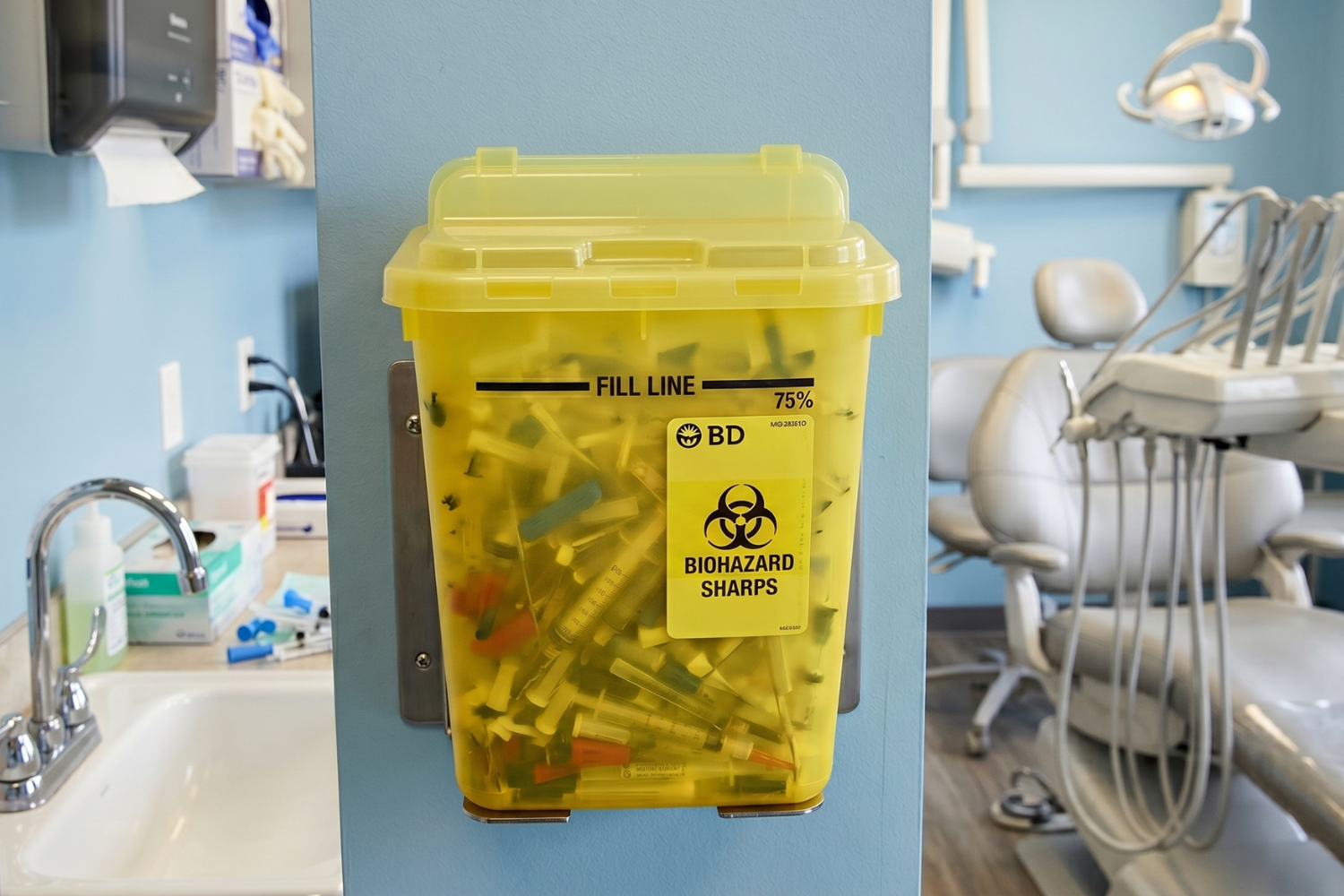
Any item capable of causing a puncture wound or cut. This includes used needles, syringes, lancets, scalpel blades, and broken glass contaminated with biological material. Sharps require puncture-resistant containers and cannot go in regular garbage or soft biohazard bags.
2. Biohazardous Waste
Non-sharp material contaminated with blood, body fluids, or other potentially infectious material. This category includes blood-soaked dressings, used gloves and gowns, specimen containers, and suction tubing from procedures.
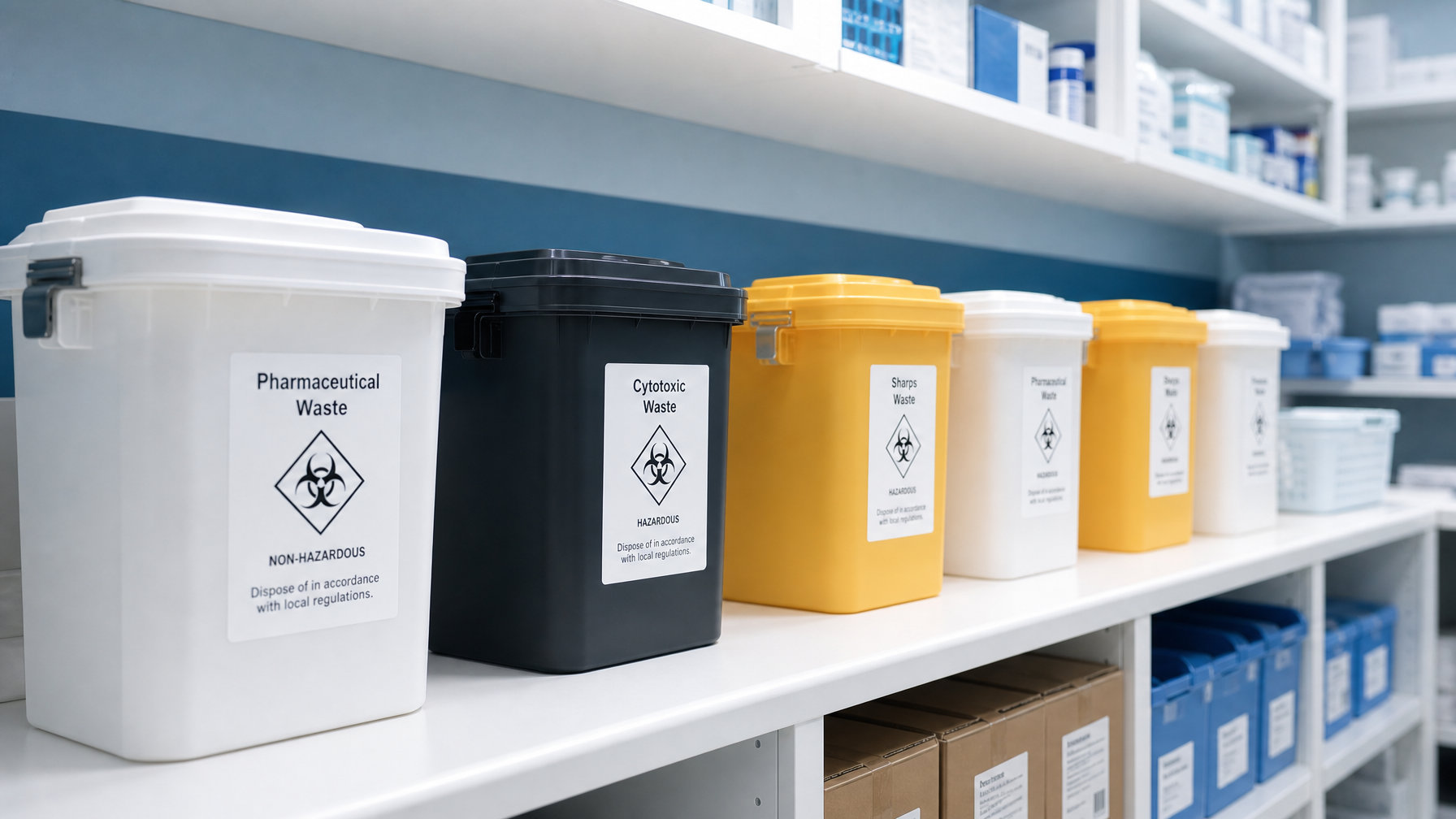
3. Pharmaceutical Waste
Expired, unused, or contaminated medications: prescription drugs, over-the-counter medications, vaccines, and controlled substances. Pharmaceutical waste disposal requirements vary based on whether a drug classifies as hazardous. Many facilities are surprised to learn that discarding expired medications in the general waste stream does not meet compliance requirements.
4. Dental Waste
Dental practices generate several regulated waste streams not common in other healthcare settings: amalgam (mercury-containing), used dental X-ray fixer solution, and lead from X-ray packaging. These require separate disposal pathways from standard biohazardous waste.
How to Store Medical Waste Before Pickup
Proper on-site storage is one of the most commonly overlooked parts of compliance. A few general principles apply across facility types:
- Sharps go directly into a certified, puncture-resistant sharps container. Never recap needles before disposal, and never fill containers beyond the marked fill line.
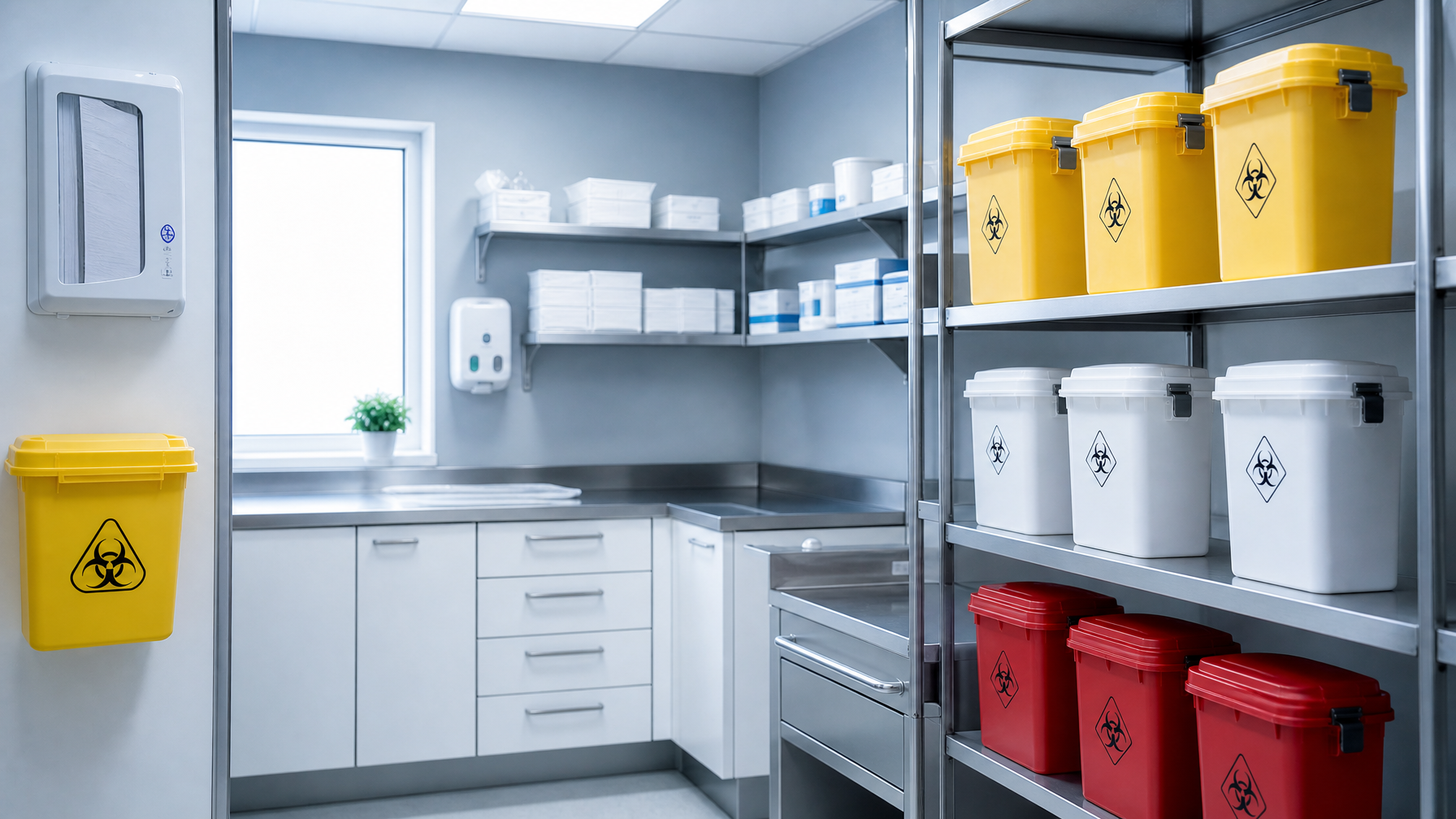
- Biohazardous waste goes into approved biohazard bags inside rigid, labeled containers marked with the biohazard symbol.
- Pharmaceutical waste requires a separate, secure container to prevent unauthorized access.
- All waste should sit in a designated, secure area away from patient and public access until pickup.
- Keep container lids closed between uses and seal containers before they reach capacity.
Your licensed waste carrier or provincial regulator is the most reliable source for current container specifications and storage requirements specific to your facility type.
How Medical Waste Gets Treated
Once medical waste leaves your facility, it travels to a licensed treatment facility. Two primary treatment methods are used in Alberta:
High-Temperature Incineration
Sharps, biohazardous waste, and pharmaceutical waste typically go through incineration at temperatures between 850 and 1,100°C. This destroys pathogens and significantly reduces waste volume. Residual ash then goes to a licensed hazardous waste landfill.
Autoclave Sterilization
Some categories of biohazardous waste can be treated through autoclaving: a process that uses high-pressure steam to sterilize material and render it non-infectious. The treated waste then goes to a regular landfill. Autoclaving is preferred from an environmental standpoint where it is permitted, as it produces fewer emissions than incineration.
Who Regulates Medical Waste Disposal in Alberta?
Medical waste disposal in Alberta sits under the Environmental Protection and Enhancement Act (EPEA), administered by Alberta Environment and Protected Areas. The province's Acceptable Industry Practices (AIP) document for biomedical waste, last updated in June 2019, translates those requirements into practical guidance aligned with the national CCME Guidelines.
Alberta Health Services (AHS) also publishes guidance for specific facility types, including community-based health services and body art studios. Dental practices follow standards set by the College of Dental Surgeons of Alberta (CDSA).
The EPEA provides authority for enforcement actions, including administrative penalties and compliance orders, for facilities that do not meet regulated waste management requirements.
What Compliance Looks Like in Practice
For most Alberta facilities, compliance with medical waste disposal requirements generally means:
- Segregating waste at the point of generation, by category
- Using approved containers for each waste type
- Storing waste securely until pickup
- Arranging pickup through a licensed waste carrier
- Retaining records of waste pickups
Alberta does not use a formal manifest system for routine biomedical waste pickups. Your service invoice and the receiving facility's records together form your compliance documentation. Keep your invoices. If AHS or Alberta Environment conducts an inspection, your pickup records are among the first things they review.
Do Small Facilities Need a Professional Pickup Service?
For small and mid-sized facilities in Alberta, a scheduled pickup from a licensed biomedical waste carrier is often the most practical path to compliance. It removes the burden of tracking disposal requirements across multiple waste categories, provides chain-of-custody documentation, and means your team does not transport regulated waste themselves.
Cobalt Medical Solutions provides scheduled and on-demand biomedical, sharps, and pharmaceutical waste pickup across Alberta, from Calgary and Edmonton to Red Deer, Lethbridge, Medicine Hat, and rural communities. If your facility generates any of the waste categories described above, Cobalt can confirm whether your current setup is compliant and walk you through what a service arrangement looks like.
Contact Cobalt Medical Solutions at (403) 700-6455 or visit cobaltmedicalsolutions.com.
Final Thoughts
Medical waste disposal in Alberta does not have to be complicated. The rules exist to protect your staff, your patients, and your community, and the path to compliance is straightforward once you know what your waste streams are, how to contain them, and where they need to go.
When in doubt, consult a licensed waste management professional or refer directly to Alberta's Acceptable Industry Practices document for biomedical waste.