Pharmaceutical Waste Disposal in Alberta: What Clinics and Pharmacies Need to Know
If your facility handles medications — whether you prescribe, dispense, administer, or store them — pharmaceutical waste is part of your daily operation. Expired stock, unused doses, contaminated vials, and returned medications all need a clear disposal pathway. Putting them in the regular garbage is not that pathway.
This guide covers what pharmaceutical waste actually includes, how the different waste streams work, what controlled substances add to the picture, and what a professional pickup program looks like in practice. It is written for clinic managers, pharmacists, office administrators, and anyone responsible for waste management at an Alberta healthcare facility.
What Counts as Pharmaceutical Waste?
Pharmaceutical waste is any solid, liquid, or semi-solid material that contains a drug or medication and is no longer fit for use. In a clinical or pharmacy setting, this includes:
- Expired medications — prescription drugs, over-the-counter medications, and vaccines past their use-by date
- Unused or partially used stock — opened vials, partially administered IV bags, blister packs with remaining doses
- Contaminated medications — drugs that have come into contact with blood, bodily fluids, or other contaminants
- Returned medications — patient returns that cannot be restocked or reused
- Hazardous drugs — chemotherapy agents, cytotoxic compounds, and other medications that require elevated handling precautions due to their chemical properties
Not all pharmaceutical waste is equal. Whether a drug requires elevated handling precautions affects the container type, storage approach, and how it needs to be collected — which is why getting the stream right from the start matters.
Pharmaceutical Waste Has Its Own Stream
One of the most common misconceptions in smaller clinics and pharmacies is that pharmaceutical waste is the same as regular biomedical waste, or that it can share a container with sharps or general clinical waste. It cannot.
Pharmaceutical waste has its own designated collection stream. That stream is separate from general garbage, separate from sharps, and separate from the industrial chemical waste that governs things like solvents and cleaning acids used in other industries. Healthcare facilities generate a specific type of waste that requires a specific type of collection — and mixing streams is where compliance problems start.
In practical terms, this means your facility needs containers designated specifically for pharmaceutical waste, a collection program that handles that stream correctly, and documentation of each pickup. That is true whether you are a large hospital pharmacy or a small independent clinic.
Pharmaceutical Waste vs. Biomedical Waste: What Is the Difference?
These two categories are often used interchangeably, but they refer to different things and, in many cases, require different containers.
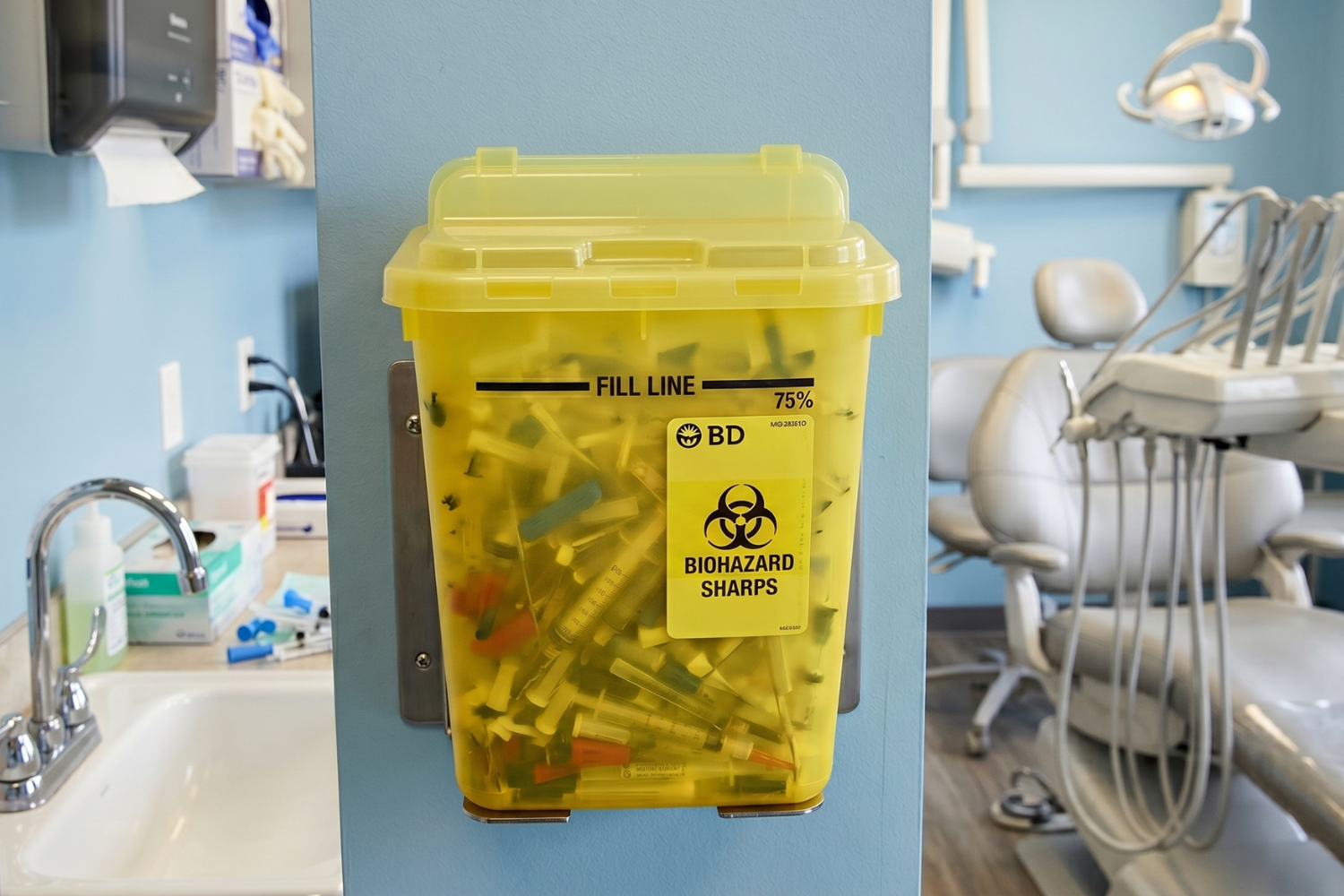
Biomedical waste covers materials generated during patient care that carry infection risk — sharps, contaminated dressings, blood-soaked materials, and similar items. These go into designated biomedical waste containers.
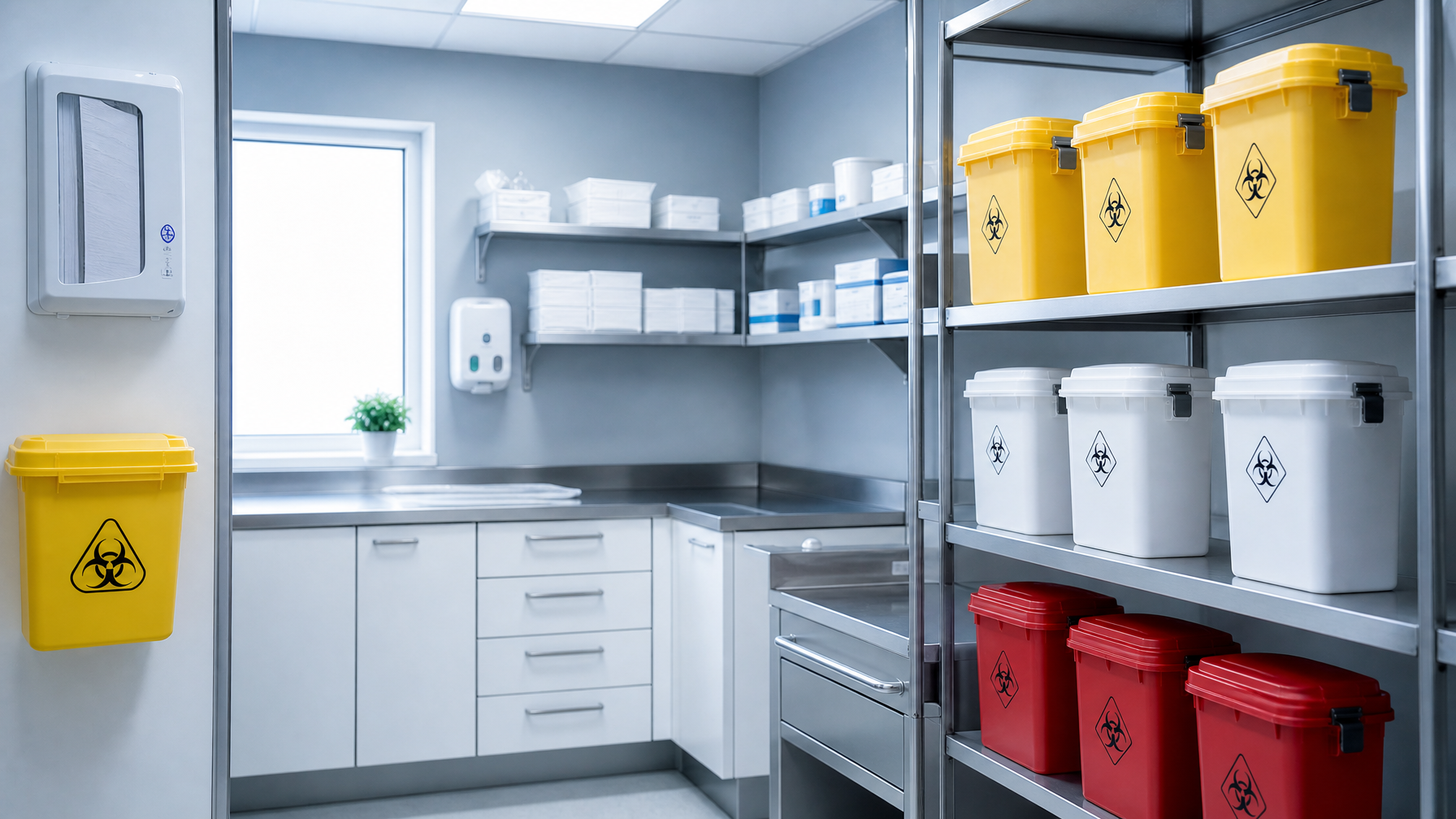
Pharmaceutical waste covers medications and drug-related materials — expired stock, unused doses, returned medications, and hazardous drugs. Depending on the material, this goes into a white pharmaceutical waste container or, for certain hazardous drug categories, a red biomedical waste container with appropriate labelling.
Both streams need proper collection and disposal. Neither belongs in the regular garbage or down a drain.
If you are unsure which stream a specific material belongs to, a professional waste management provider can walk you through the right container setup for your facility.
Controlled Substances: An Additional Layer
If your facility holds controlled substances — opioids, benzodiazepines, stimulants, or similar medications — there are additional requirements on top of standard pharmaceutical waste handling. These requirements come from Health Canada and apply across all provinces.
The specifics of what your facility needs to do depend on your facility type, your license category, and whether you are dealing with unserviceable stock or post-consumer patient returns. Health Canada provides guidance for both scenarios:
If you are unsure how these requirements apply to your facility, speak with your compliance advisor or regulatory consultant. What is consistent across facility types is this: controlled substance waste is not a self-managed problem. It requires a documented process, and a professional collection program ensures that documentation is in place at every pickup.
Getting Your Containers Right
Container selection is one of the most practical things you can do to keep your pharmaceutical waste stream clean and straightforward.
- Standard pharmaceutical waste — a clearly labelled, sealable container designated for pharmaceutical waste, kept separate from sharps containers and general garbage
- Hazardous drugs — containers specifically rated for hazardous drug waste, labelled accordingly, and kept strictly separate from other streams
- Controlled substances — secure, tamper-evident containers; documentation of what goes in is essential at every step
The most common problem in smaller facilities is consolidation — putting everything into one bin to save space. Each waste type has its own container for a reason, and mixing them creates headaches at the collection and treatment stage that are avoidable with the right setup from the start. A professional waste management provider will supply the right containers for your specific mix of waste types as part of a scheduled pickup program. You should not have to source them separately.
Can Pharmaceutical Waste Go in the Regular Garbage?
No. Pharmaceutical waste should not go into the regular municipal garbage stream. It needs a designated collection pathway, not a dumpster. The same applies to flushing medications — pharmaceutical compounds that reach the water system can affect aquatic environments and water quality over time.
For clinics, pharmacies, and medical offices, the practical solution is a scheduled pickup program calibrated to the volume your facility generates. It does not need to be complex, and it does not need to be expensive. It does need to be consistent.
How a Pharmaceutical Waste Pickup Program Works
A professional pharmaceutical waste pickup program for Alberta clinics and pharmacies is straightforward:
- Assessment — a waste management provider reviews your facility's waste types, volumes, and current storage setup
- Container supply — appropriate containers are provided for each waste stream your facility generates
- Scheduled collection — pickups run on a frequency that matches your volume, whether weekly, biweekly, or monthly
- Transport and disposal — waste is collected and sent to an approved treatment facility
- Documentation — a receipt is provided at each pickup for proof of service
For smaller facilities — independent pharmacies, walk-in clinics, specialist offices — the assumption is often that a formal program is only for large hospitals or chains. That is not the case. Scheduled service scales to the volume you actually generate, and the documentation it provides is useful regardless of your size.
Pharmaceutical Waste Pickup Across Alberta
Cobalt Medical Solutions provides pharmaceutical and controlled substance waste pickup across Alberta, including Calgary, Edmonton, Red Deer, Lethbridge, Medicine Hat, and rural communities. If your facility is generating pharmaceutical waste without a clear collection plan in place, contact us at
(403) 700-6455 or visit
cobaltmedicalsolutions.com to find out what a scheduled service looks like for your operation.